Table of Contents
Introduction
Teaching good manners in Islam for kids is one of the most important responsibilities for parents and teachers. In Islam, manners are not just polite behavior—they are part of our faith. The Prophet Muhammad ﷺ said: “The best among you are those who have the best manners and character.” (Hadith in Bukhari).
When children grow up with strong Islamic manners, they become kind, respectful, and responsible individuals. Manners shape how they speak, behave, and interact with others at home, school, and society. By teaching manners early, we nurture children who reflect Islamic values in their daily lives.
Before diving into teaching good manners, it helps if your child has explored:
- Why Learning About Islam is Fun for Kids – Learn about Islam through fun activities.
- Meet the Prophets: Stories to Inspire Young Hearts – Prophets’ stories for kids.
- Understanding Allah’s Names and Attributes in a Simple Way – Simple guide to Allah’s names.
Step 1: Teach Kind Words
Words are powerful, and Islam places great emphasis on speaking kindly. Teaching children polite words helps them interact respectfully.
- Introduce Islamic greetings: Teach “As-Salamu Alaikum” and the reply “Wa Alaikum Assalam.” Explain that it spreads peace and love.
- Polite phrases: Practice “Please,” “Thank you,” “Excuse me,” and “Sorry.”
- Qur’anic reminder: Allah says, “And speak to people good words.” (Quran 2:83).
👉 Activity idea: Roleplay daily situations like asking for water, greeting a guest, or apologizing after a mistake.
Step 2: Encourage Respectful Actions
Respect in Islam is more than just words—it is shown in actions. Children must learn to respect parents, teachers, elders, and even their peers.
- Obeying parents: Remind kids that serving parents is one of the greatest deeds in Islam.
- Helping at home: Encourage small acts like setting the table, cleaning toys, or helping siblings.
- Respecting teachers: Show gratitude by listening and not interrupting.
👉 Activity idea: Create a “Respect Jar.” Each time the child shows respect (helping, listening, greeting kindly), place a token in the jar. At the end of the week, reward them.
Step 3: Use Stories and Examples
Stories are a powerful way to connect children with Islamic values.
- Stories of the Prophets: Share how Prophet Muhammad ﷺ was kind to neighbors, even those who mistreated him.
- Examples of the Sahabah: Teach how Abu Bakr (RA) was known for his compassion and Umar (RA) for his justice.
- Daily stories: Relate simple modern stories like sharing toys or helping a lost child to show manners in action.
👉 Discussion idea: After each story, ask questions like: “What did the Prophet do? How can we do the same today?”
Step 4: Create Fun Activities
Children learn faster when lessons are fun.
- Manners Chart: Track daily good manners (saying salaam, helping, sharing). Use colors or stickers.
- Roleplay Games: Pretend scenarios—like a guest coming home—so kids can practice greeting, serving, and thanking.
- Reward System: Small prizes, praise, or certificates can motivate kids to repeat good manners.
Step 5: Integrate Manners with Daily Life
Good manners should not be just lessons—they must become part of daily life.
- Table manners: Say “Bismillah” before eating and “Alhamdulillah” after.
- Community manners: Practice patience in lines, greet neighbors, and keep public spaces clean.
- School manners: Encourage kids to share, respect classmates, and avoid bullying.
👉 Tip for parents: Be role models. Children copy what they see more than what they are told.
Step 6: Teach Islamic Etiquette Through Duas
Islam has beautiful supplications (duas) for daily life that connect manners with worship.
- Dua before eating: “Bismillah wa ‘ala barakatillah.”
- Dua after sneezing: “Alhamdulillah.”
- Dua when meeting someone: Say salaam.
Teaching kids these small duas reinforces manners and spirituality together.
Step 7: Manners in Digital Life
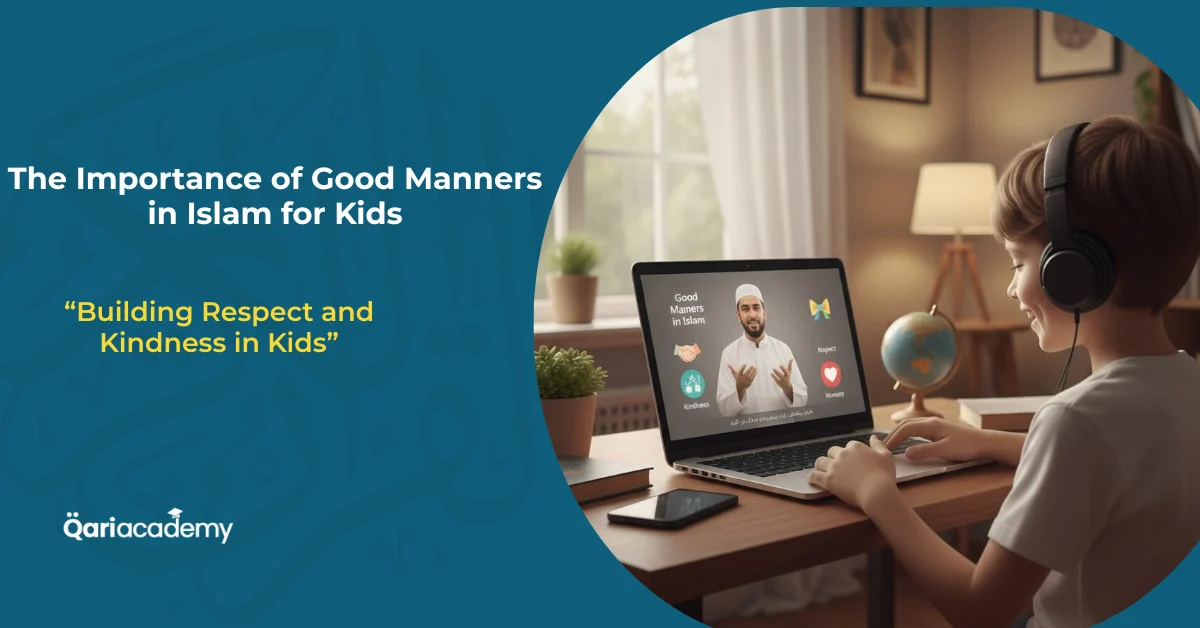
Today, many children spend time online. Good manners should extend to the digital world.
- Respect online: Teach kids not to bully or use harsh words online.
- Gratitude: Remind them to thank teachers during online classes.
- Privacy: Explain not to share personal information.
Bonus Tips
- Keep lessons short (5–10 minutes).
- Use repetition with songs, stories, and visuals.
- Praise effort, not just results.
- Encourage children to notice good manners in others.
- Be consistent—manners are built through daily practice.
At QariAcademy, we make learning good manners in Islam for kids engaging, practical, and fun. Through stories, activities, and real-life applications, children not only memorize manners but also live by them every day.
👉 Enroll today and help your child grow into a kind, respectful, and confident Muslim!
FAQ: Good Manners in Islam for Kids
1. What age is suitable to start teaching manners?
– Children as young as 3–4 can begin with simple manners like greetings.
2. Can non-Arabic speakers learn manners in Islam?
– Yes, Islamic manners are universal and can be taught in any language.
3. How often should we practice manners at home?
– Daily practice works best, even in short 5–10 minute sessions.
4. Can siblings learn manners together?
– Absolutely! They reinforce behavior through imitation and friendly competition.
5. Should we use charts and visual aids?
– Yes, children respond well to visual reinforcement like charts or stickers.
6. Is roleplay effective in teaching manners?
– Very effective, as children practice scenarios in a safe and fun way.
7. Can we combine manners with Prophet stories?
– Definitely, stories make manners more memorable and inspiring.
8. Should parents model good manners?
– Yes, children copy their parents more than they listen to instructions.
10. Can this be integrated with Quran learning?
– Yes, manners are deeply connected to Quranic teachings.
9. Do children need to memorize polite phrases perfectly?
– Understanding and consistent use is more important than memorization.
11. How can teachers encourage manners in class?
– By praising respectful behavior and correcting gently.
12. What are examples of manners with neighbors?
– Greeting, helping in need, keeping noise low, and sharing food.
13. Are table manners part of Islam?
– Yes, saying Bismillah, eating with the right hand, and avoiding waste are Sunnah.
14. Can children learn patience as part of manners?
– Yes, patience in waiting turns, sharing, and forgiving is key.
15. Should rewards always be material?
– No, verbal praise, hugs, or small certificates are effective too.
16. How do we handle bad manners?
– Correct calmly, explain the right way, and encourage retrying.
17. What’s the role of grandparents in teaching manners?
– Grandparents are a source of wisdom and can pass down traditions beautifully.
18. How do good manners connect to worship?
– Manners like patience, gratitude, and respect strengthen prayer and faith.
19. Are digital manners important for kids?
– Yes, children must learn kindness and respect even online.
20. What is the ultimate goal of teaching manners?
– To raise children who live by Islamic values, respect others, and please Allah.