
Free printable PDF · 2 pages
Free Tajweed Rules Chart (PDF)
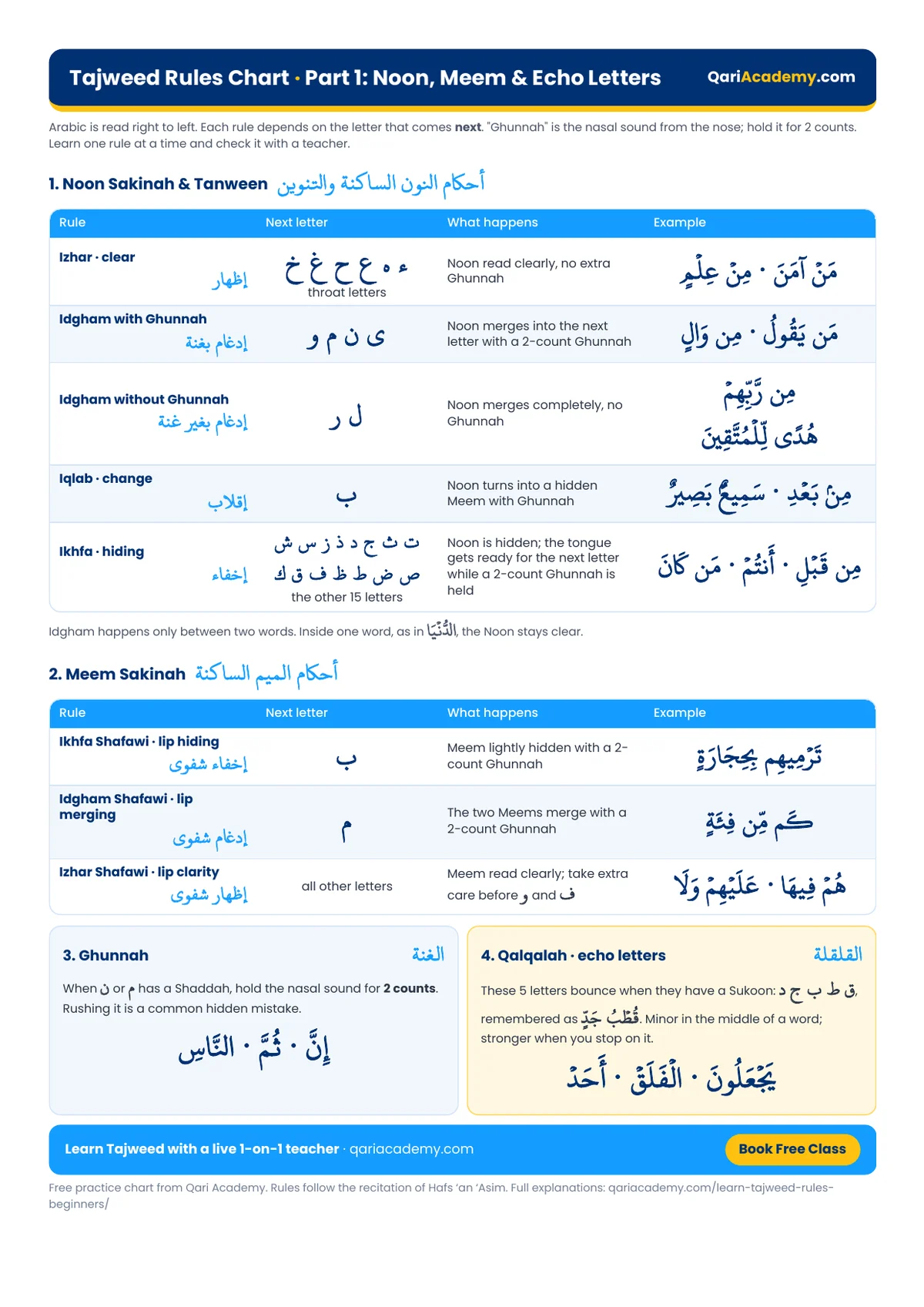
All the core Tajweed rules on two printable pages: Noon and Meem Sakinah, Ghunnah, Qalqalah, Madd, heavy letters, the Lam and Ra rules and the stop signs, each with a Quran example. Keep it beside your Mushaf while you practise.
What’s on the chart
- Page 1: Noon, Meem and echo letters. Izhar, Idgham (with and without Ghunnah), Iqlab and Ikhfa for Noon Sakinah and Tanween; the three Meem Sakinah rules; Ghunnah on Noon and Meem with Shaddah; and the five Qalqalah letters.
- Page 2: lengths, heavy letters and stops. The six kinds of Madd with their counts, the always-heavy letters, the Lam in “Allah”, Sun and Moon letters, the letter Ra, and the stop signs of the Madinah Mushaf.
Each rule has its English and Arabic name and a short Quran example, set in the Uthmanic Hafs script. The rules follow the recitation of Hafs ‘an ‘Asim.
How to practise with the chart
- Take one rule at a time, starting with Noon Sakinah and Tanween.
- Read the example aloud slowly, then find the same rule in a short Surah you know.
- Count the Ghunnah and Madd lengths on your fingers until they feel natural.
- Ask a teacher to listen. Rules are easy to read and hard to hear in your own voice.
Where can I read the full explanation of each rule?
Our Tajweed rules for beginners guide explains every rule on this chart in more detail, with common mistakes and a 30-day practice plan. If you are still learning the letters and vowel marks, start with our free Noorani Qaida chart.
Learn Tajweed with a teacher
Our live one-to-one Tajweed course for adults takes you through these rules with a qualified teacher who listens to your recitation and corrects it on the spot. For children, see Tajweed for Kids. Your first class is free.