Table of Contents
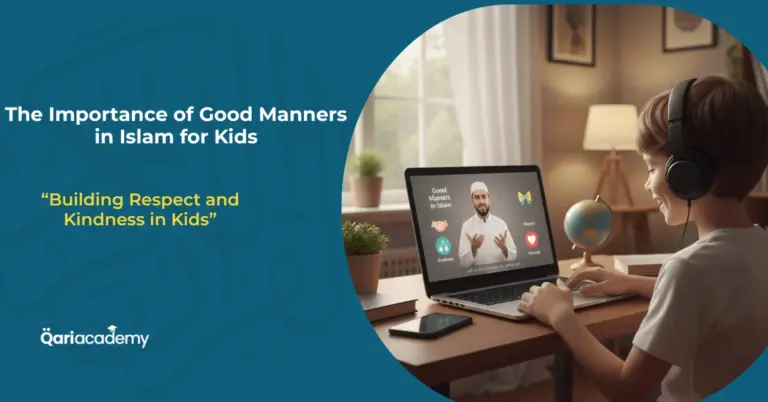
Introduction: Why Manners Matter in Islam
Good manners are the heart of Islam.
The Prophet Muhammad ﷺ said:
“The best among you are those who have the best manners and character.” (Sahih Bukhari)
Teaching Islamic etiquettes at home and school helps children grow with:
- Respect for others
- Kindness in speech and action
- Discipline and self-control
- A strong sense of Islamic identity
When children practice these manners daily, they don’t just behave well — they reflect the beauty of Islam in their homes, schools, and communities.
What Are “Islamic Etiquettes”?
“Islamic etiquettes” (آداب إسلامية) mean the beautiful ways a Muslim behaves based on Qur’an and Sunnah — in speech, eating, dressing, studying, and even playing.
These manners make daily life peaceful and filled with barakah (blessings).
Islamic Etiquettes at Home
Home is where a child learns their first lessons in character.
Here are key etiquettes every Muslim home should teach:
1. Greeting with Salam
Teach children to say “Assalamu Alaikum” when they enter or leave home.
It spreads peace and love in the family.
“Spread the salam among you.” (Sahih Muslim)
2. Respecting Parents
Remind children that obeying and respecting parents is an act of worship.
Simple habits like saying “thank you,” “please,” or helping with chores show gratitude.
“And be kind to parents…” (Al-Isra 17:23)
3. Eating Etiquette
Children can learn eating manners through fun routines:
- Wash hands before and after eating
- Say “Bismillah” before starting
- Eat with the right hand
- Don’t waste food
- Say “Alhamdulillah” when done
Make it fun: a “Manners Chart” on the fridge can help them track progress!
4. Helping and Sharing
Encourage small acts of kindness at home — like helping a sibling, giving water to a guest, or sharing toys.
The Prophet ﷺ said:
“The most beloved people to Allah are those most beneficial to others.” (Al-Mu’jam Al-Awsat)
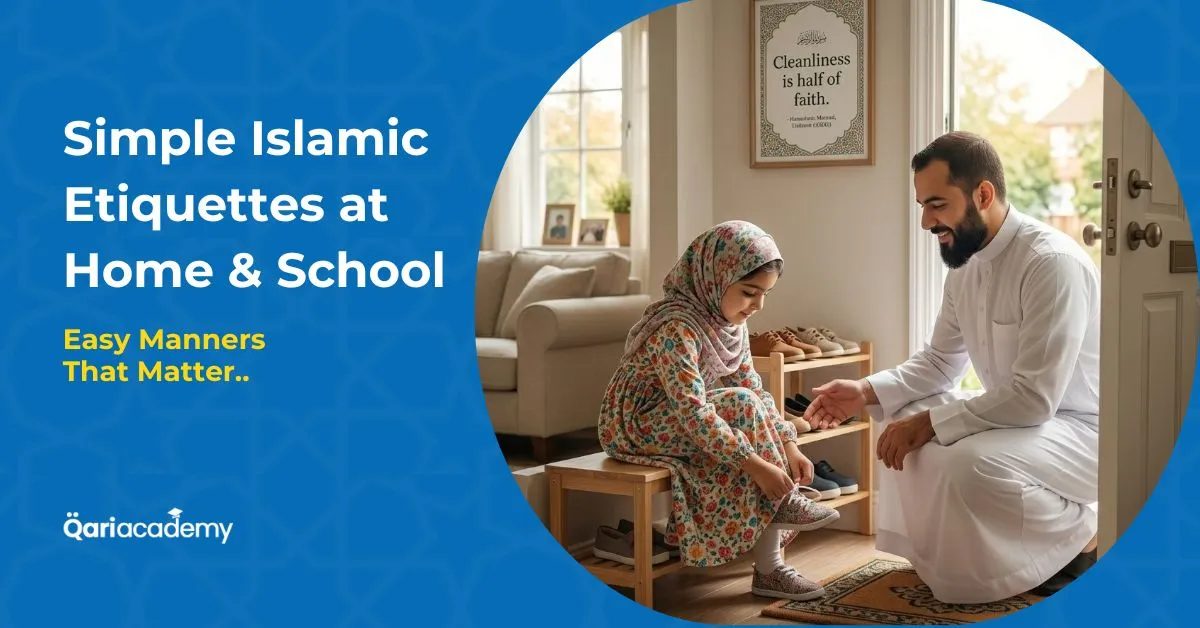
5. Keeping the House Clean
Cleanliness is part of faith!
Teach kids to tidy their rooms, fold clothes, and clean up after playing.
“Cleanliness is half of faith.” (Sahih Muslim)
Islamic Etiquettes at School
When children leave home, they represent Islam through their behavior.
Here’s how to help them carry those values proudly:
1. Respecting Teachers
Explain that respecting teachers is like respecting knowledge itself.
They should greet teachers politely, listen attentively, and show gratitude for their efforts.
“He who does not thank people does not thank Allah.” (Sunan Abu Dawood)
2. Being Honest
Honesty builds trust.
Encourage your child to admit mistakes, avoid cheating, and tell the truth — even when it’s hard.
“Truthfulness leads to righteousness, and righteousness leads to Paradise.” (Sahih Bukhari)
3. Being Kind to Classmates
Kindness creates friendships and prevents bullying.
Teach them to share, include others, and help those who feel left out.
“None of you truly believes until he loves for his brother what he loves for himself.” (Sahih Bukhari)
4. Using Polite Words
Simple words like “please,” “thank you,” and “sorry” make a big difference.
Remind kids that even speech reflects their iman.
5. Respecting School Property
Taking care of books, desks, and supplies shows gratitude for Allah’s blessings.
A good Muslim never wastes or damages what they’ve been given.
Everyday Islamic Manners
| Situation | Good Manners |
|---|---|
| Entering the home | Say “Assalamu Alaikum” |
| Showing gratitude | Say “JazakaAllahu Khairan” |
| Sneezing | Say “Alhamdulillah” |
| Replying to sneeze | Say “Yarhamuk Allah” |
| Visiting someone | Ask permission, make short visits |
| Using the bathroom | Say the du’a before entering |
| Going to sleep | Say “Bismika Allahumma amutu wa ahya” |
| Waking up | Say “Alhamdulillah alladhi ahyana…” |
| Talking | Speak softly, avoid interrupting |
| Playing | Be fair, don’t cheat or hurt others |
How Parents Can Teach Islamic Manners
- Model the Behavior:
Kids learn from what they see — not what they’re told. - Tell Stories:
Use Prophet Muhammad’s ﷺ stories that show good manners. - Use Positive Reinforcement:
Praise your child when they act kindly. - Make Du’a Together:
Ask Allah to help your child be polite and respectful. - Include in Daily Routine:
Turn manners into a habit — not a lecture.
Stories That Inspire Good Manners
1. The Prophet ﷺ and the Boy
A young boy was eating greedily. The Prophet ﷺ said kindly:
“O boy, say Bismillah, eat with your right hand, and eat what is in front of you.”
He didn’t scold him — he taught him with love.
2. The Companion Who Shared Water
During a battle, a wounded man refused water until others were served first.
This shows selflessness and empathy — two qualities every child can learn.
The Reward of Good Manners
Good manners are not just social behavior — they are acts of worship.
The Prophet ﷺ said:
“Nothing is heavier on the believer’s scale on the Day of Judgment than good character.” (Sunan Tirmidhi)
So every “please,” “thank you,” or act of kindness brings reward from Allah.
🔗 Related Articles You Might Enjoy
- Basic Concepts of Halal and Haram
- Understanding Zakat and Charity for Kids
- Understanding Allah’s Names and Attributes in a Simple Way
- Learning the Stories of the Sahabah (Companions) Easily
Encourage Your Child to Learn With QariAcademy
At QariAcademy, we don’t just teach Qur’an — we teach character.
Your child will learn how to live Islam beautifully through stories, manners, and daily practice.
Our teachers use kindness-based learning to help children love Islam and live by its values.
✨ Enroll your child today to build Islamic character and confidence:
👉 Join QariAcademy Now
FAQ: Simple Islamic Etiquettes at Home and School
1. At what age should I start teaching manners?
From age 3–4 — use simple actions like greetings and saying “Bismillah.”
2. How can I make manners fun for kids?
Use charts, stickers, and role-playing games.
3. What’s the best way to correct bad behavior?
Explain calmly, show the right example, and reward effort.
4. How do I teach Islamic manners at school if the school isn’t Islamic?
Encourage your child to practice quietly — saying salam, honesty, and kindness.
5. Can I use stories of the Prophet ﷺ to teach manners?
Absolutely — they are the best examples for children.
6. What’s the difference between good manners and Islamic manners?
Good manners are polite behavior; Islamic manners are guided by intention to please Allah.
7. How to teach children to control anger?
Teach them the du’a for anger and the Sunnah of staying silent or sitting down.
8. How can I reinforce manners daily?
Repeat short reminders, like “What would the Prophet ﷺ do?”
9. What’s the reward for good manners?
Allah loves those with good character — it’s the heaviest deed on Judgment Day.
10. How does QariAcademy include manners in its lessons?
Every Qur’an and Arabic class includes short reminders about behavior, respect, and kindness.