Table of Contents
Introduction
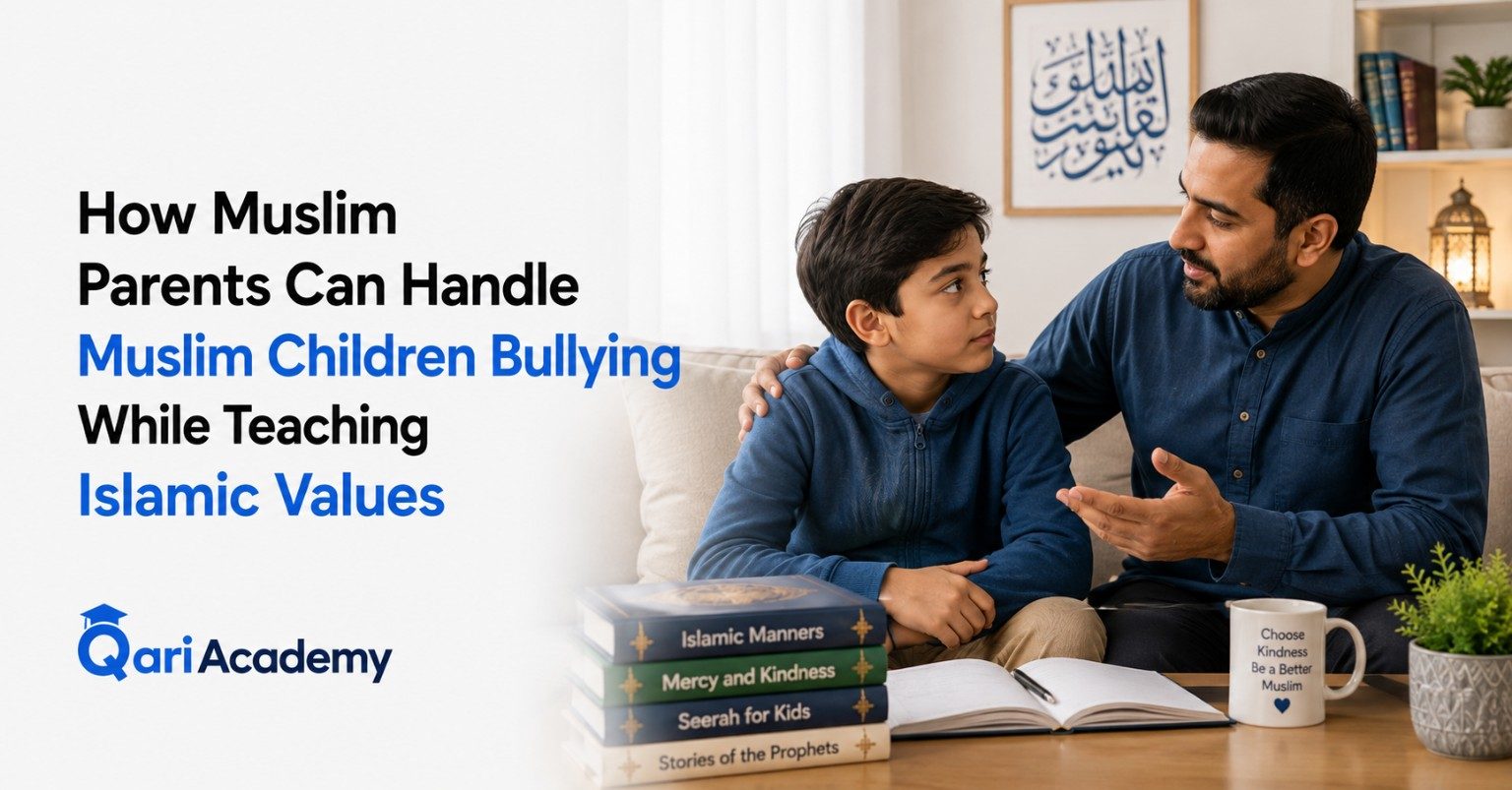
What should a Muslim child do when another student insults them, mocks their religion, makes fun of their hijab, or deliberately tries to embarrass them?
Should they ignore it?
Should they fight back?
Should they tell a teacher?
Should they defend Islam?
Should they walk away?
For Muslim parents, the answer can feel complicated because there are two different responsibilities involved.
You want your child to be strong enough to protect themselves.
But you also want them to maintain the Islamic values you are trying to teach them.
You don’t want your son or daughter to become aggressive just because someone was rude.
But you also don’t want to teach them that being patient means accepting repeated abuse.
This is why teaching Muslim children bullying strategies requires more than simply telling them to “be nice.”
Children need to understand the difference between patience and passivity, forgiveness and allowing abuse, confidence and arrogance, and self-defense and revenge.
Islam teaches Muslims to respond to wrongdoing with justice and good character while also recognizing the importance of protecting themselves from harm.
The Quran says:
“Repel evil with that which is better.”
But this does not mean a child should quietly accept bullying.
A child can respond to bullying appropriately while maintaining good character.
The goal is to raise a Muslim child who can say:
“I don’t need to become cruel just because someone is cruel to me.”
At the same time:
“I don’t have to accept being mistreated.”
What Is the Difference Between Bullying and a Normal Conflict?
Before teaching children how to respond, parents need to help them understand what they’re dealing with.
Children have disagreements.
They argue over games.
They get annoyed with each other.
They sometimes say things they regret.
That’s different from repeated bullying.
Bullying may involve repeated:
- Insults
- Threats
- Humiliation
- Social exclusion
- Physical aggression
- Online harassment
- Targeting because of religion, appearance, disability, ethnicity, or another characteristic
StopBullying.gov describes bullying as involving unwanted aggressive behavior with a power imbalance and repetition or potential for repetition. StopBullying.gov — What Is Bullying?
This distinction matters.
If two children argue once, they may need help resolving a disagreement.
If one child repeatedly targets another child, adults need to intervene.
1. Teach Your Child That Being Muslim Does Not Mean Being Passive
Some children misunderstand Islamic patience.
They may think:
“If I’m a good Muslim, I should never defend myself.”
That’s not correct.
Islam teaches patience and forgiveness, but it also teaches justice.
Your child can say:
“Stop.”
They can walk away.
They can tell a teacher.
They can tell their parents.
They can ask an adult for protection.
None of those actions contradict Islamic character.
2. Explain What “Be Patient” Actually Means
When parents tell children:
“Be patient.”
children may hear:
“Do nothing.”
Instead, explain:
“Being patient means controlling yourself and making a wise decision instead of reacting with anger.”
That’s very different.
Your child might feel angry.
That’s normal.
But they don’t have to allow anger to control their actions.
They can stop.
Think.
Then choose the safest response.
3. Teach the Difference Between Forgiveness and Trust
This is a valuable lesson.
Your child may forgive someone.
That doesn’t mean they have to become friends with them again immediately.
For example:
“I forgive you, but I don’t want you to treat me that way again.”
That’s healthy.
Your child can forgive while maintaining boundaries.
This lesson will become useful throughout adulthood.
4. Teach Children Not to Fight Over Insults
If someone says:
“Your religion is stupid.”
your child doesn’t need to punch them.
They can say:
“You don’t have to agree with me.”
Then walk away.
If the behavior continues, tell an adult.
The goal is to prevent escalation.
5. But Don’t Teach Them to Ignore Serious Threats
There is a dangerous extreme on the other side.
Some parents tell children:
“Just ignore it.”
That may be appropriate for a single rude comment.
It isn’t enough when there are:
- Threats
- Physical violence
- Sexual harassment
- Repeated targeted bullying
- Extortion
- Blackmail
- Serious online abuse
In those cases:
Tell an adult immediately.
Children shouldn’t be expected to solve serious safety issues alone.
6. Give Your Child a Simple Three-Step Rule
Teach:
Step 1: Speak up
“Stop. I don’t like that.”
Step 2: Leave
Move away from the situation if possible.
Step 3: Tell an adult
If the behavior continues or is serious, report it.
This gives children something practical to remember.
7. Teach Them When They Should Skip Step One
Sometimes saying “stop” isn’t safe.
If someone is physically aggressive, threatening, or significantly older or stronger, your child shouldn’t be expected to confront them.
Instead:
Get away.
Find an adult.
Get help.
Safety comes first.
8. Don’t Tell Your Child to “Hit Back”
Some parents believe:
“If someone hits you, hit them harder.”
That can turn one incident into a fight.
It can also result in both children being disciplined.
Teach your child to prioritize safety.
If physical aggression occurs, they should get away and seek adult help.
If immediate physical danger exists, they should seek emergency assistance appropriate to their location.
9. Teach Your Child to Use Their Voice
A confident voice can be powerful.
Teach phrases such as:
“Stop.”
“Don’t talk to me like that.”
“That’s not okay.”
“Leave me alone.”
“I’m going to tell my teacher.”
Practice these at home.
Children often freeze when they are nervous.
Practicing gives them a script.
10. Teach Body Language
Confidence isn’t only words.
Teach your child to:
- Stand upright
- Look toward the person without staring aggressively
- Speak clearly
- Avoid screaming
- Move toward a safe area
The message is:
I’m not afraid, but I’m not looking for a fight.
11. Teach Your Child Not to Insult Back
If someone says:
“You’re stupid.”
don’t teach:
“Tell them they’re stupid too.”
Instead:
“You don’t have to become like the person hurting you.”
This is where Islamic character becomes practical.
The Quran encourages responding to evil with what is better. Quran — Surah Fussilat 41:34
That doesn’t mean accepting abuse.
It means refusing to let someone else’s behavior control your character.
12. Teach the Difference Between Strength and Revenge
Your child may think:
“If I don’t get revenge, I’m weak.”
Explain:
Revenge is reacting.
Strength is choosing your response.
A child who walks away from a pointless fight may actually demonstrate more self-control than the child who throws the first punch.
13. What If the Bully Mocks Islam?
This can be particularly painful.
Your child may hear:
“Islam is stupid.”
“Muslims are weird.”
“Why do you pray?”
“Why does your mom wear that?”
Teach your child:
“You don’t need to insult them back.”
They can say:
“I believe in Islam, and I’m comfortable with that.”
Or:
“We have different beliefs.”
Or simply:
“I’m not discussing this.”
Then move on.
14. Your Child Does Not Have to Defend Islam in Every Argument
This is important.
Your child is not a religious scholar.
They don’t need to answer every question.
They can say:
“I don’t know. I can ask my parents.”
That’s a perfectly respectable answer.
In fact, teaching children to admit:
“I don’t know.”
is an important part of intellectual honesty.
15. Give Them Reliable Sources for Their Questions
If a classmate asks:
“Why do Muslims pray?”
your child should eventually have enough Islamic knowledge to answer.
But that knowledge should come from:
- Parents
- Qualified teachers
- Quran
- Authentic Islamic sources
- Trusted scholars
not random TikTok videos.
This is one reason structured Quran and Islamic education can be valuable.
QariAcademy offers live one-on-one online Quran learning for children, including Quran reading, Tajweed, Hifz, Quranic Arabic, and Islamic studies. QariAcademy — Online Quran Programs
A consistent relationship with a teacher can give children a safe environment to ask questions they may be uncomfortable asking elsewhere.
16. Don’t Turn Your Child Into a Debater
Some parents want their child to respond to every criticism.
That’s unnecessary.
Your child needs to know:
When to answer.
When to ignore.
When to leave.
When to report.
That’s more useful than winning arguments.
17. Teach Them That People Can Disagree Respectfully
Your child will meet people with different beliefs.
That’s normal.
Teach:
“Someone can disagree with Islam without being your enemy.”
And:
“You can disagree with someone without insulting them.”
This prepares children for multicultural environments.
18. What If the Bully Is a Muslim Child?
This happens too.
Don’t assume every bullying situation is between Muslims and non-Muslims.
A Muslim child can bully another Muslim child.
Your response should remain the same:
The behavior is wrong.
Don’t excuse it because:
“They’re both Muslim.”
19. What If the Child Is Your Child’s Friend?
This can be complicated.
Your child may say:
“But he’s my best friend.”
Explain:
“A friend should make you feel safe and respected.”
If the friend repeatedly humiliates your child, threatens them, or pressures them, boundaries may be necessary.
Teach your child that friendship isn’t a license to tolerate mistreatment.
20. Teach Children About Online Bullying
Bullying doesn’t stop at the school gate.
Children can experience:
- Group-chat insults
- Hurtful comments
- Fake accounts
- Edited images
- Rumors
- Exclusion
- Threatening messages
Teach them:
Don’t retaliate publicly.
Save evidence.
Block/report where appropriate.
Tell parents.
Tell the school when relevant.
If the behavior includes threats or serious harassment, adults need to become involved.
21. Don’t Tell Them to Delete Everything Immediately
If serious online bullying is happening, deleting messages may destroy useful evidence.
Instead:
Save relevant screenshots.
Then report and block as appropriate.
Parents can decide what additional steps are needed.
22. Build a Relationship Where Your Child Reports Problems
This may be the biggest protection of all.
Your child should know:
“If something bad happens online, I can tell Mom or Dad.”
Even if they made a mistake.
Even if they clicked something.
Even if they responded badly.
Even if they’re embarrassed.
Say:
“You will never get in trouble simply for telling me that someone is hurting you.”
This encourages early reporting.
23. Don’t Shame Your Child for Being Bullied
Sometimes parents accidentally make children feel responsible.
“Why do they keep choosing you?”
“You need to toughen up.”
“Maybe you’re doing something.”
Avoid that.
The responsibility for bullying belongs to the person choosing to bully.
Your child may still need to learn better social skills in some situations.
But that’s a separate conversation.
24. Build Confidence Outside the Bullying Situation
A child whose entire identity becomes:
“The kid who gets bullied”
can lose confidence.
Give them other areas where they can succeed.
Encourage:
- Sports
- Quran
- Art
- Reading
- Science
- Languages
- Clubs
- Volunteering
Success in one area can strengthen confidence in another.
25. Help Your Child Develop Good Muslim Friends
Community matters.
A child who has healthy Muslim friendships may feel less isolated.
That doesn’t mean they should only be friends with Muslims.
It means they should have access to peers who understand and respect their faith.
Mosque activities, youth programs, Islamic classes, and community events can help.
26. Make Islamic Learning Positive
If your child is being bullied, don’t respond by saying:
“You need more Quran because you’re becoming weak.”
That can create guilt.
Instead:
“Let’s keep learning together.”
Quran should be a source of guidance and connection.
QariAcademy can provide structured one-on-one Quran learning that fits into a child’s school routine. Explore QariAcademy Programs
The objective is to strengthen the child’s knowledge and relationship with Islam, not to use Quran as a punishment.
27. Teach Your Child About Forgiveness Carefully
Forgiveness is valuable.
But forgiveness does not mean:
“Let people continue hurting you.”
Teach:
“You can forgive someone and still keep your distance.”
That distinction protects children from unhealthy relationships.
28. Teach Them to Pray for Help
Salah and dua can give children emotional grounding.
Teach simple duas and encourage them to turn to Allah when they feel frightened or hurt.
But don’t use prayer as a replacement for practical action.
The message should be:
Make dua + take appropriate action.
Tell an adult.
Report bullying.
Get help.
And ask Allah for strength.
29. Teach Children That Allah Knows What They’re Experiencing
A bullied child can feel:
“Nobody understands.”
Remind them:
“Allah knows what you’re going through.”
This can provide comfort.
But again, don’t use religious language to discourage seeking human help.
Islam doesn’t require children to silently suffer.
30. How Parents Should Respond When Their Child Comes Home Crying
Don’t start with:
“What did you do?”
Start with:
“Come here.”
Then:
“Tell me what happened.”
Listen.
Then:
“Thank you for telling me.”
Then:
“We’re going to figure this out together.”
That sequence can make a huge difference.
31. When Should Parents Contact the School?
Contact the school when bullying:
- Repeats
- Escalates
- Targets your child’s religion
- Becomes physical
- Includes threats
- Happens online between students
- Interferes with school attendance
- Affects your child’s wellbeing
You don’t need to wait until your child is completely overwhelmed.
Early intervention is often better.
32. What Should Parents Ask the School?
Ask:
“What exactly happened?”
“Who was involved?”
“What steps are being taken?”
“Who should my child report future incidents to?”
“How will the school monitor the situation?”
“When should we follow up?”
Be specific.
33. Don’t Immediately Confront the Other Child
Your anger may be justified.
But directly confronting another child can make the situation worse.
Work through appropriate adults and school procedures.
If there are serious threats or safety concerns, escalate appropriately.
34. Teach Children That Asking for Help Is Courage
Tell your child:
“You don’t have to solve everything yourself.”
Getting help isn’t weakness.
It’s good judgment.
A child who tells a teacher:
“Someone keeps threatening me.”
is doing the responsible thing.
35. A Simple Islamic Response Framework
Teach your child:
Stop
Don’t react immediately.
Think
What is the safest response?
Speak
Use calm words if appropriate.
Leave
Move away when possible.
Report
Tell a trusted adult.
Pray
Ask Allah for strength and guidance.
This combines practical safety with Islamic values.
36. The Balance Parents Need
There are two dangerous extremes.
Extreme One: Passive Parenting
“Just ignore everything.”
This can leave children vulnerable.
Extreme Two: Aggressive Parenting
“Fight back and show them who you are.”
This can escalate conflict.
The healthier approach is:
Calm + boundaries + support + appropriate action.
37. What Your Child Should Learn From the Experience
The goal isn’t for your child to think:
“Everyone is bad.”
Instead:
“Some people behave badly, but I can handle difficult situations.”
Not:
“I have to hide that I’m Muslim.”
But:
“I can be Muslim and confident.”
Not:
“I should attack people who disagree.”
But:
“I can disagree respectfully.”
Not:
“I have to tolerate abuse.”
But:
“I can set boundaries and seek help.”
That’s real character development.
38. A Family Bullying Plan
| Situation | Child’s Response | Parent’s Response |
|---|---|---|
| One rude comment | Ignore or respond calmly | Listen |
| Repeated teasing | Report | Contact school |
| Religious insults | Set boundary/report | Support and document |
| Online harassment | Save evidence/report | Help escalate |
| Physical aggression | Get safe | Contact school/appropriate authorities |
| Threats | Tell adult immediately | Treat seriously |
39. The Parent’s Biggest Blind Spot
Parents sometimes focus on:
“How can I stop my child from being bullied?”
But there is another question:
“How can I make sure my child doesn’t become cruel in response?”
That’s where Islamic character becomes important.
Your child can stand up for themselves without becoming a bully.
They can protect themselves without humiliating someone else.
They can be confident without becoming arrogant.
They can disagree without becoming hateful.
40. The Long-Term Goal
Your child will eventually leave school.
But they will continue encountering difficult people.
They will encounter:
- Difficult coworkers
- Unfair managers
- Online arguments
- Religious disagreements
- Social pressure
- People who misunderstand Islam
You won’t always be there.
So you’re teaching a lifelong skill:
How to respond to people who don’t treat you well.
That’s more valuable than teaching one perfect response to one bully.
Conclusion
Teaching Muslim children bullying strategies isn’t about raising children who never experience conflict.
That’s impossible.
It’s about raising children who know how to respond to conflict without losing themselves.
Teach them that patience doesn’t mean accepting abuse.
Teach them that forgiveness doesn’t mean removing boundaries.
Teach them that confidence doesn’t mean aggression.
Teach them that defending themselves doesn’t require revenge.
Teach them when to walk away.
Teach them when to speak up.
Teach them when to involve an adult.
And teach them that being Muslim is not something they need to hide because someone else doesn’t understand it.
The Quran teaches Muslims to respond to evil with what is better, while Islamic principles also recognize justice and protection from harm. Quran — Surah Fussilat 41:34
Your child needs both.
Good character and strong boundaries.
Patience and courage.
Faith and practical safety skills.
And those qualities don’t develop overnight.
They are built through years of conversations, example, Islamic education, and consistent parenting.
QariAcademy can support the Islamic education side of that journey through live one-on-one Quran classes in Quran reading, Tajweed, Hifz, Quranic Arabic, and Islamic studies. QariAcademy — Online Quran Programs
The purpose isn’t simply to teach your child more information.
It’s to help them develop a relationship with the Quran and Islamic values that can guide them when parents aren’t standing beside them.
So when your child comes home one day and says:
“Someone bullied me today.”
Don’t teach them:
“Be weak.”
And don’t teach them:
“Destroy them.”
Teach them:
“You don’t have to become like the person who hurt you. Let’s figure out the right thing to do.”
That is the balance between strength and Islamic character.
And that’s the kind of lesson your child can carry with them long after the school year ends.
If you’d like to strengthen your child’s Quran and Islamic education alongside your parenting efforts, you can explore QariAcademy’s programs and start with a free trial:
Book a Free Trial at QariAcademy