Key takeaways
- Islamic studies for children covers faith, worship, the stories of the prophets, manners and daily duas, not only the Quran.
- Younger children tend to learn well through stories, repetition and daily habits. Older children can handle reasons, questions and discussion.
- Each age group below suggests topics to focus on and one idea for home.
- A teacher can follow a plan and answer your child’s questions, while you reinforce it at home.
Table of Contents
What are Islamic studies for kids?
Islamic studies is the part of a child’s learning that explains what Muslims believe and how they live. It goes beyond reading the Quran. It includes the basics of faith (iman) and worship, the stories of the prophets, the life of the Prophet Muhammad ﷺ, good manners, and the daily duas a child can say and understand.
It works best alongside Quran reading and Arabic. Our Islamic Studies for Kids course brings these together in live one-to-one lessons.
The main topics
| Topic | What children learn |
|---|---|
| Faith (iman) | Belief in Allah, the angels, the books, the prophets, the Last Day and destiny |
| Worship (ibadah) | Salah, wudu, fasting, charity and Hajj, step by step |
| Stories of the prophets | The lives and lessons of the prophets |
| The life of the Prophet ﷺ | His character, his family and the message he brought |
| Manners (akhlaq) | Honesty, kindness, respect, sharing and patience |
| Daily duas and etiquette | Short supplications for eating, sleeping, travelling and more |
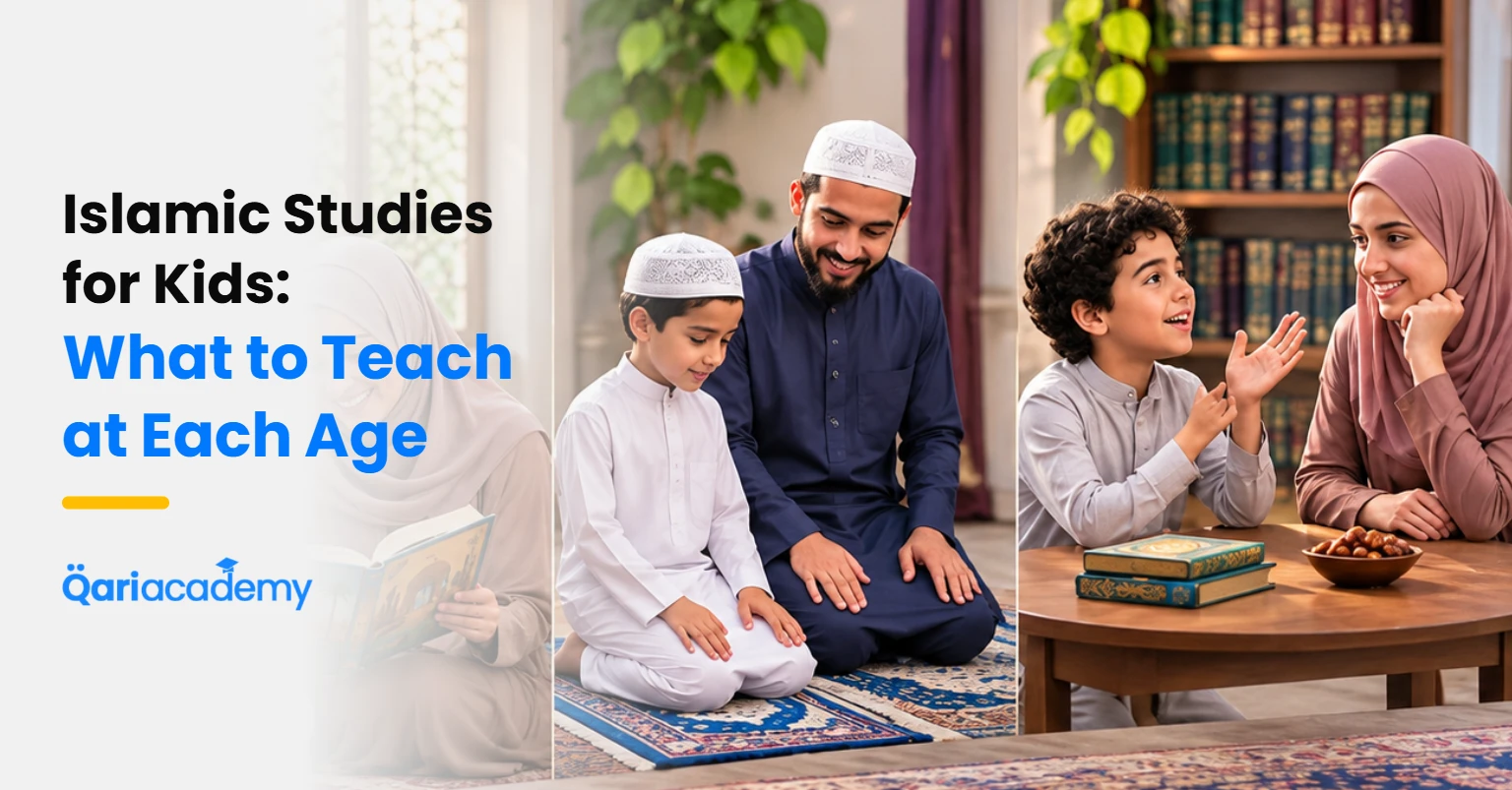
Ages 4 to 6: Simple faith and daily habits
Young children understand faith through stories, repetition and routine. Keep ideas short and concrete.
- Focus on: who Allah is, saying Bismillah and Alhamdulillah, simple stories of the prophets, an introduction to wudu and short duas.
- Try at home: say a short dua together before meals and bed, and read one prophet story a week.
Ages 7 to 9: Prayer, manners and stories
Many children at this age enjoy learning how things work and love doing things “the right way”. It is a good time to build the habit of prayer and to talk about character.
- Focus on: the steps of salah, the five pillars of Islam and the six articles of faith, more detailed prophet stories and manners such as honesty and respect.
- Try at home: pray together, and talk about a good manner each week with a real example from the day.
For ideas on teaching manners, see our post on good manners in Islam for kids.
Want a teacher to guide your child’s Islamic studies? Our Islamic Studies for Kids course is taught in live one-to-one lessons. Your first class is free. Book a free trial
Ages 10 to 12: Understanding the “why”
Older children begin to ask why. This is a healthy stage. Answer their questions calmly and encourage them to ask their teacher too.
- Focus on: the reasons behind acts of worship, the life of the Prophet ﷺ in more depth, the idea of accountability and how Islam guides daily choices.
- Try at home: invite questions at dinner, and look up answers together with a teacher’s help.
Teens: Identity, questions and responsibility
Teenagers need to feel respected. They often face questions about faith from friends, school and social media, and they want honest answers rather than slogans.
- Focus on: core beliefs and how to explain them, responsibility in worship, respectful behaviour in friendships and family, and living as a Muslim at school.
- Try at home: listen first, give reasons rather than orders, and keep the door open for questions.
How Islamic studies fits with Quran and Arabic
Quran reading, Arabic and Islamic studies support one another. Reading builds the ability to recite, Arabic builds understanding of words, and Islamic studies gives the background and values that make both meaningful. For what to expect from Quran lessons at each age, see Quran learning by age. For the wider picture of how we teach Islamic studies, visit our Islamic studies hub.
Common mistakes to avoid
- Teaching rules without the reasons, especially as children grow older and start asking why.
- Turning learning into pressure, which can make a child dislike it.
- Expecting the same things from every child, regardless of age and personality.
Our post on common mistakes kids make in Islamic studies explains how to correct them gently.
Frequently Asked Questions
What should I teach my child about Islam first?
Start with simple belief in Allah, saying Bismillah and Alhamdulillah, short duas and stories of the prophets. Build from there as your child grows.
At what age should a child start Islamic studies?
Children can begin learning simple ideas and duas at a young age through stories and daily habits. Formal lessons can start when your child is ready, which depends on focus, interest and comfort. A teacher can help judge readiness.
Can Islamic studies be learned online?
Yes. In a live one-to-one online lesson, a teacher can explain topics, answer your child’s questions and adapt to their age.
What is the difference between Islamic studies and Quran classes?
Quran classes focus on reading, Tajweed and memorization, and can also cover the meaning of verses. Islamic studies focuses on beliefs, worship, stories and manners. A child can take both, depending on your goals.
How can I support Islamic studies at home?
Keep daily habits such as short duas and prayer, read stories together and invite questions without judgement. Consistency matters more than long sessions.
Start with a free class
If you would like a teacher to guide your child’s Islamic studies, you can try a class before deciding whether to continue. Your first class is free.
Explore Islamic Studies for Kids