Key takeaways
- An Ijazah is a teacher’s permission to teach and transmit the Quran as they received it.
- A sanad is the chain of teachers through which a recitation is passed on, link by link.
- An Ijazah in the whole Quran usually follows reciting it from memory to a qualified teacher.
- An Ijazah is different from a course certificate. You can ask a teacher who gave theirs and in which recitation.
Table of Contents
What is an Ijazah?
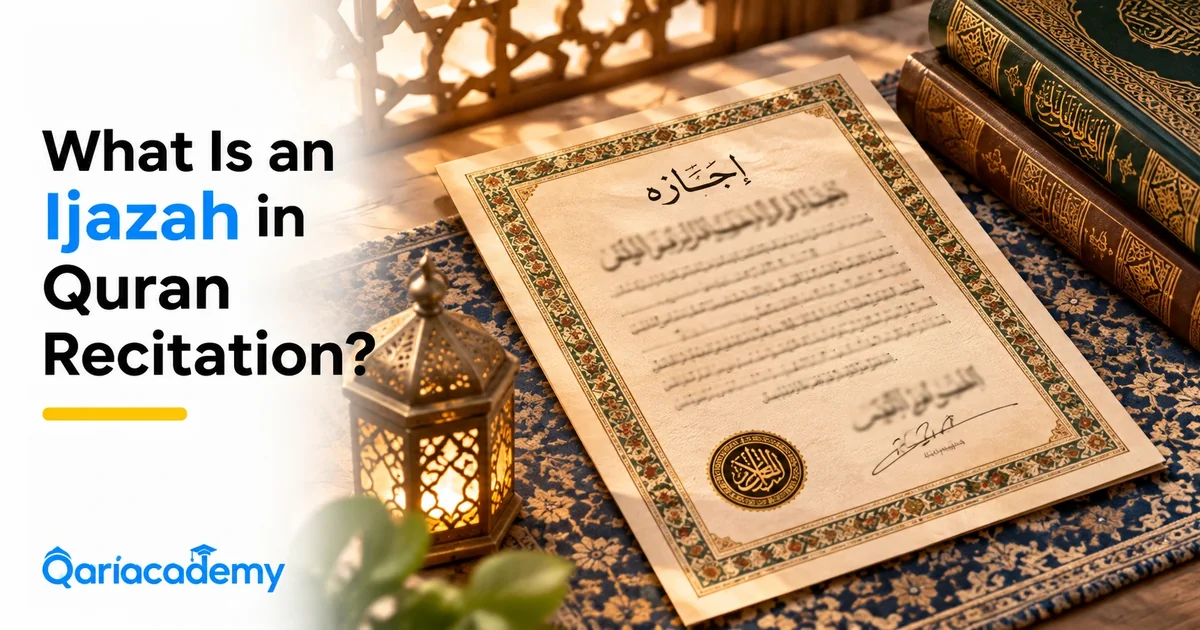
In Quran recitation, an Ijazah is a licence from a teacher. It states that the student has recited the Quran (or the portion it covers) to that teacher, that it met the teacher’s standard of accuracy, and that the student is permitted to teach it to others in the way it was received.
The word comes from Arabic and means “permission” or “authorisation”. It reflects a traditional way of learning: the Quran is not only read from a page, it is heard, corrected and passed from teacher to student.
What is a sanad?
A sanad is the chain of transmission. Each teacher in the chain learned from the teacher before, and the chain is traced back to the Prophet ﷺ. When a teacher gives an Ijazah, the student becomes the latest link in that chain.
That is why people speak of “an Ijazah with sanad”. The sanad is what connects your recitation to those who taught before you.
Ijazah vs a course certificate
| Ijazah | Course certificate | |
|---|---|---|
| What it shows | You recited the Quran to a qualified teacher and may transmit it | You completed a course or level |
| Who gives it | A teacher who is authorised to grant it | An academy or institution |
| Chain of teachers | Yes, a sanad | Not normally |
| Typical requirement | For an Ijazah in the whole Quran: reciting it from memory to the teacher | Finishing the course material |
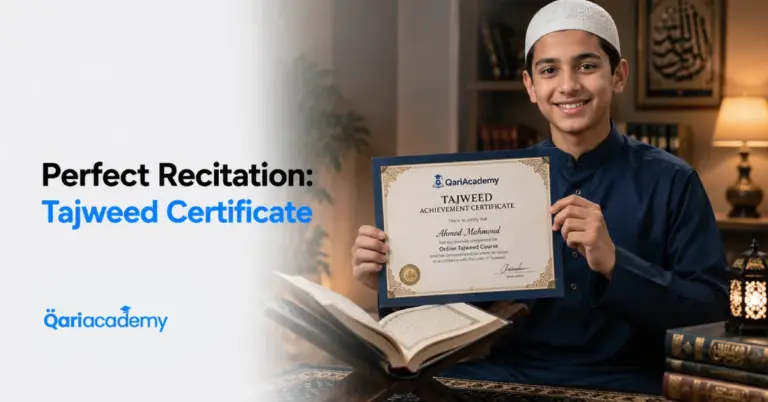
A course certificate is useful, but it is not an Ijazah. Check whether a program uses the two words as if they mean the same thing.
How does a student receive an Ijazah?
Requirements vary between teachers, but the general path is:
- Learn to read the Quran fluently with correct Tajweed.
- For an Ijazah in the whole Quran, memorize it. If you are starting memorization as an adult, read how to memorize the Quran as an adult.
- Recite the Quran to a qualified teacher, who listens and corrects.
- When the teacher is satisfied that the student meets the required standard, they may grant the Ijazah, and the student joins the chain.
Some teachers also ask the student to show understanding of Tajweed rules. The exact steps are decided by the teacher who grants it.
Not sure where to start? A teacher can listen to your recitation and tell you what to work on first. Live one-to-one lessons with male and female teachers. Your first class is free. Book a free trial
Which recitation is the Ijazah in?
The Quran is recited in recognised ways of transmission. An Ijazah names the one it covers. The most widely used recitation in many parts of the world is the riwayah of Hafs. When someone says they hold an Ijazah, it is reasonable to ask which riwayah it is in.
How to check a teacher’s Ijazah
You are not being rude by asking. A teacher with an Ijazah should be able to explain it. Ask:
- Who gave you your Ijazah?
- In which riwayah is it?
- Can you tell me about your chain of teachers?
- Do you hold it in the whole Quran?
For a longer checklist, see how to check an online Quran teacher’s qualifications.
What an Ijazah does not mean
- It does not mean a teacher is automatically good at teaching beginners or children. Teaching skill and patience matter too.
- It does not mean someone is a scholar of every Islamic subject. It concerns recitation.
- It does not replace the need to practise. It confirms a standard of recitation at the time it was given.
At Qari Academy
We have teachers who hold an Ijazah in the recitation of Hafs ‘an ‘Asim, and we have Al-Azhar graduates. Our online Ijazah course with sanad grants an Ijazah to students who meet its requirements, which include complete memorization of the Quran and Tajweed proficiency. You can build toward that through our Quran memorization course for adults and our Tajweed course. Our teachers page introduces the teachers.
Frequently Asked Questions
What does Ijazah mean in Quran?
It means permission. A teacher grants an Ijazah to a student who has recited the Quran to them correctly, allowing the student to teach it as it was received.
Do I need to memorize the whole Quran to get an Ijazah?
For an Ijazah in the whole Quran, the student normally recites it from memory to the teacher. Some teachers also grant Ijazahs for specific texts or portions, so the scope should be clear.
Is an online Ijazah valid?
Practice and opinion vary. Ask the teacher how their own Ijazah was given and about their chain, as you would for an in-person one, and ask a qualified scholar if validity matters to you.
What is the difference between Ijazah and Tajweed certificate?
A Tajweed certificate usually shows that you completed a course. An Ijazah is a licence from a teacher with a chain of transmission.
Can women receive an Ijazah?
Yes. Women have received and given Ijazahs in the Quran throughout Islamic history.
Can I begin before I have memorized the whole Quran?
Yes. You can begin with reading and Tajweed, then move toward memorization and later an Ijazah. See our Tajweed for adults course for a starting point.
Talk to a teacher about your goal
If an Ijazah is your goal, a teacher can listen to your recitation and tell you what to work on first. Your first class is free.
Related guides
- Qari, Hafiz, Muqri: What Each Title Means
- How to Check an Online Quran Teacher’s Qualifications
- How to Memorize the Quran as an Adult
- Tajweed Rules for Beginners