Table of Contents
Introduction
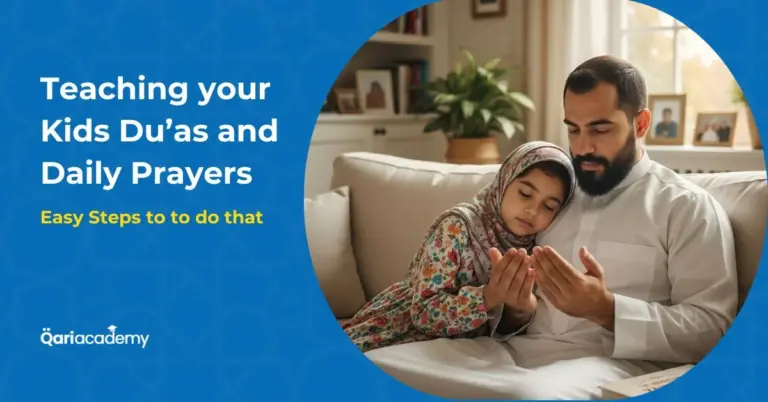
Teaching kids the importance of prayer is one of the most essential foundations of Islamic upbringing. When children understand why Salah matters, they are more likely to perform it consistently, not just as a habit but with true devotion and connection to Allah.
Prayer in Islam is more than just physical actions — it is a spiritual practice that builds discipline, gratitude, and love for Allah. For children, learning Salah early helps them establish a strong bond with their faith that lasts a lifetime.
Before starting, it is helpful if your child has already explored:
- Why Learning About Islam is Fun for Kids – [Learn about Islam through fun activities]
- Meet the Prophets: Stories to Inspire Young Hearts – [Prophets’ stories for kids]
- Understanding Allah’s Names and Attributes in a Simple Way – [Simple guide to Allah’s names]
- Good Manners in Islam for Kids – [Teach kids Islamic etiquette]
Step 1: Explain the Purpose of Prayer
Children need to know why they are praying before they can love prayer. Explaining the purpose of Salah in simple words helps them see its value.
- Connection with Allah: Salah is a direct way to talk to Allah. Just as children speak to parents when they need comfort, Salah is when we share our hearts with Allah.
- Gratitude: Prayer teaches children to thank Allah for food, family, and health.
- Discipline and Structure: Salah organizes the day around meaningful moments, teaching children time management.
👉 Example: Compare prayer to charging a device. Just as a phone needs charging to work, our hearts need Salah to feel strong and peaceful.
Step 2: Demonstrate How to Pray
Children learn best by watching and imitating. Parents and teachers should demonstrate prayer step by step.
- Wudu (Ablution): Show how to wash hands, face, and feet. Turn it into a fun routine.
- Prayer Postures: Standing, bowing (Ruku’), prostrating (Sujood), and sitting. Use visuals or role-play to make them memorable.
- Recitation: Begin with short Surahs like Al-Fatihah and Al-Ikhlas. Gradually add more.
👉 Tip: Let children practice leading each other in Salah. This boosts confidence and helps them remember the steps.
Step 3: Make Learning Interactive
Interactive learning keeps children engaged and prevents prayer from feeling like a chore.
- Visual Charts: Use colorful posters showing the steps of Salah.
- Story Props: Dolls or toys can “pray” alongside children for fun.
- Role-play: Children take turns acting as teacher and student.
👉 Internal Link: Pair this with Good Manners in Islam for Kids to teach children how prayer connects with respect, discipline, and etiquette.
Step 4: Create a Routine
Consistency is key to building a habit. Children thrive on routine, and prayer times provide the perfect structure.
- Set a Prayer Corner: Designate a small prayer space at home with a mat, Qur’an, and prayer chart.
- Start Small: Focus on Fajr or Maghrib first (shorter prayers). Gradually add more.
- Family Salah: Pray together as a family to build unity and motivation.
👉 Example: Make a simple reward chart with stickers for every prayer completed.
Step 5: Encourage Reflection and Gratitude
Children should not only do Salah but also understand its impact. Encourage them to reflect.
- Ask Questions: “How do you feel after praying?” or “What did you thank Allah for today?”
- Stories of Prophets: Share how Prophet Muhammad ﷺ loved prayer and found peace in it.
- Benefits: Highlight that Salah makes us calmer, patient, and focused.
Step 6: Teach Through Stories and Role Models
Children love stories, and prayer becomes meaningful when tied to narratives.
- Story of Prophet Ibrahim (AS) building the Kaaba and praying with his son.
- Story of Prophet Muhammad ﷺ praying long into the night.
- Stories of young companions like Abdullah ibn Abbas who prayed alongside the Prophet ﷺ.
These stories inspire children to see prayer as honorable and rewarding.
Step 7: Address Common Challenges
Sometimes children resist prayer. Parents should respond with patience and creativity.
- Challenge: Child is too distracted.
👉 Solution: Keep lessons short (5 minutes). Use games and visuals. - Challenge: Child forgets steps.
👉 Solution: Create a poster or use apps that guide them. - Challenge: Child feels bored.
👉 Solution: Let them lead prayer occasionally or use songs to remember steps.
Step 8: Celebrate Progress
Small achievements deserve recognition. Encourage children with praise, rewards, or certificates.
- Celebrate when they memorize Surah Al-Fatihah.
- Praise them for remembering Wudu steps.
- Give a small gift when they complete their first full week of Salah.
Bonus Tips
- Start with shorter prayers (Maghrib or Fajr).
- Be patient: never scold, always encourage.
- Use games and competitions (Who can remember Wudu steps?).
- Lead by example — children copy parents more than they listen to them.
At QariAcademy, we specialize in teaching kids the importance of prayer through fun, engaging, and interactive lessons. We help children not only perform Salah but also love and understand it.
👉 Enroll today to give your child the gift of a lifelong connection with Salah!
FAQ: Teaching Kids the Importance of Prayer
1. What age should we start teaching prayer?
Children can start learning between 5–7 years old.
2. Can non-Arabic speakers learn to pray?
Yes, start with translations and simple guides.
3. How long should a beginner’s prayer take?
About 5–10 minutes.
4. Should children learn Wudu first?
Yes, Wudu is essential before Salah.
5. Can siblings practice together?
Absolutely, it makes learning fun and collaborative.
6. How can I motivate a reluctant child?
Use praise, small rewards, and model the behavior yourself.
7. How often should children repeat steps?
Daily practice is best.
8. Is memorization necessary early on?
Start with short Surahs like Al-Ikhlas and Al-Fatihah.
9. Can prayer be combined with stories?
Yes, stories make the practice more meaningful.
10. How long until children pray independently?
Usually within a few weeks of consistent practice.
11. Should prayer be taught in Arabic only?
Start with Arabic recitation but explain meaning in the child’s language.
12. What if my child makes mistakes in prayer?
Correct gently; focus on encouragement rather than perfection.
13. Can prayer improve a child’s behavior?
Yes, prayer teaches patience, discipline, and respect.
14. How can schools support prayer learning?
By providing prayer rooms, group practice, and storytelling sessions.
15. What if my child doesn’t feel motivated?
Stay consistent, make it fun, and show by example. Over time, children develop genuine interest.