Table of Contents
Introduction
Finding the right balance between academic excellence and spiritual development is one of the most important goals for Muslim families in America. Raising children in the United States offers incredible educational and personal opportunities, but it also comes with unique parenting challenges.
Every day, children are exposed to diverse cultural influences through public schools, social media, entertainment, and their peer groups. While these experiences broaden their horizons, parents often ask: How do we ensure our children stay grounded in their faith, character, and Islamic identity?
The answer lies in building a strong, loving relationship with the Book of Allah.
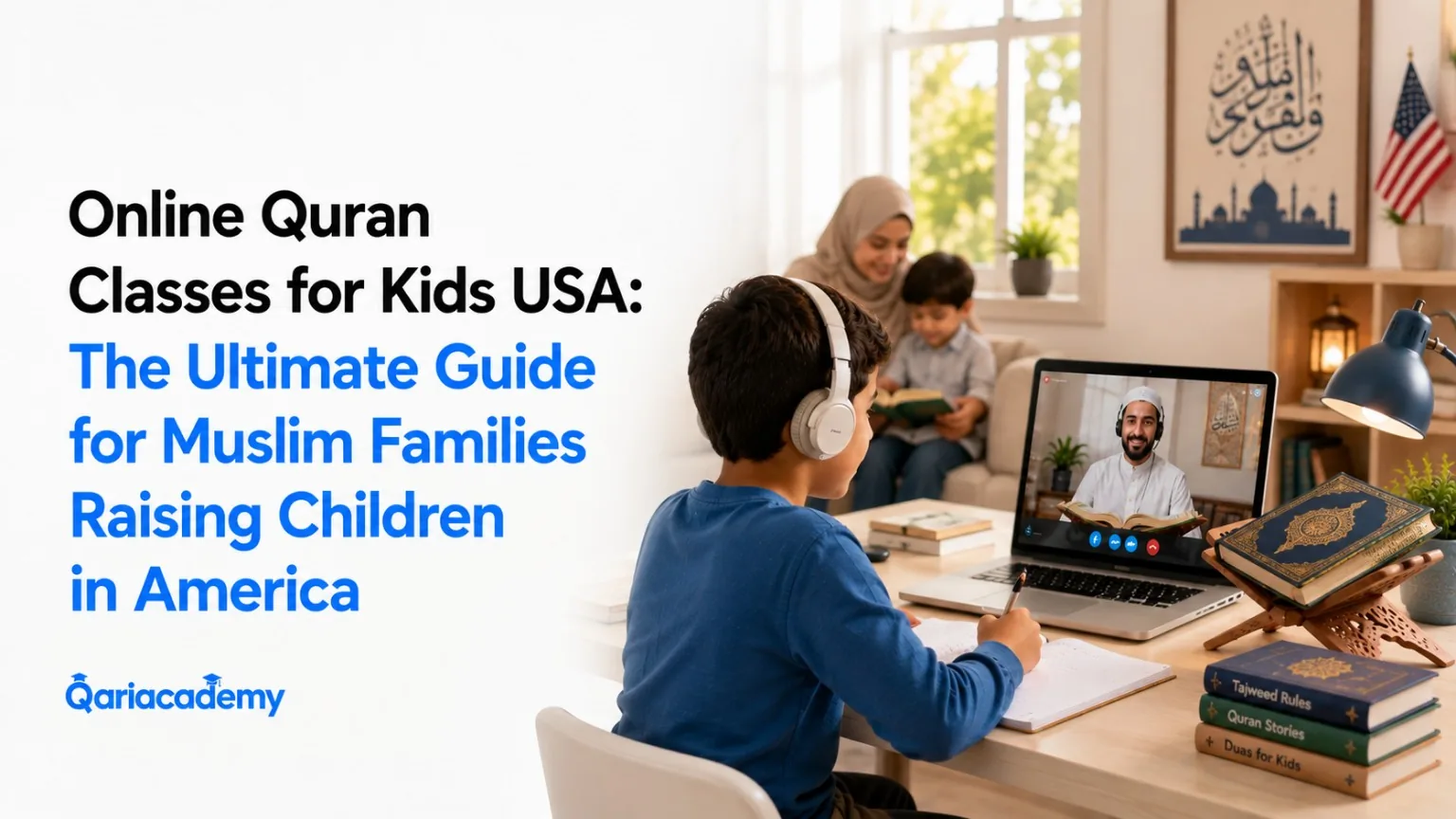
Through structured Online Quran Classes for Kids USA, children learn far more than proper recitation and memorization. They gain a lifelong compass—a foundation of wisdom, patience, compassion, and moral clarity that supports them wherever they go.
Why Muslim Families in the USA Need a Different Approach to Quran Education
American schools encourage creativity, independence, and critical thinking. Children have access to world-class educational resources, sports programs, and extracurricular activities that prepare them for success.
However, because Islamic values are rarely reinforced outside the home or local community, parents must be intentional about their children’s religious education.
This does not mean isolating children or fearing society. Instead, it highlights the importance of building a confident Islamic identity at home. When children regularly learn, reflect on, and memorize the Quran through specialized Online Hifz Classes, they develop an inner strength that protects and guides them—whether they are in the classroom, playing sports, or interacting with friends.
Balancing School, Sports, and Online Quran Classes
One of the biggest hurdles for Muslim mothers USA is time management.
A typical day for an American student involves early school runs, hours of class, homework, sports practice, and family commitments. Parents frequently ask:
“Is there really enough time for Quran memorization alongside everything else?”
The short answer is yes.
Success does not require hours of daily study; it requires consistency. To learn Quran online USA effectively, small, repeated moments produce far better results than exhausting weekend cramming.
Sample Daily Micro-Routines:
- Morning Boost: 15 minutes of revision right after Fajr or during breakfast.
- On-the-Go Practice: 5 to 10 minutes of listening to recitations during the school drive.
- Evening Routine: A focused 20 to 30-minute interactive session with an online tutor.
By integrating these small habits into daily routines, children make continuous, remarkable progress throughout the year without feeling burnt out.
The Importance of Understanding Before Memorizing
Many parents naturally focus on quantitative targets: How many surahs? How many pages? How many juz’?
While tracking progress is important, Quran memorization for kids becomes far more meaningful when children understand what they are reciting.
For example, when a child memorizes Surah Al-Asr, a teacher or parent can ask simple reflection questions:
- What is Allah teaching us about the value of time?
- Why is patience so important when facing challenges?
- How can we encourage our friends to do good deeds?
When children connect Quranic verses to real-life situations, memorization transforms from a mechanical task into a deeply emotional and personal experience.
Screen Time and the Quran: Turning Challenges into Opportunities
Screen time is a constant battle for modern parents. Children spend hours engaging with video games, streaming platforms, and social media.
Rather than treating technology as the enemy, Muslim families can harness digital tools to build positive habits:
- Replace Noise with Guidance: Play soft, beautiful Quran recitations in the background instead of leaving the TV on.
- Use Gamified Learning: Interactive apps and structured Quran classes for kids make learning feel modern and engaging.
- Set Family Screen-Free Boundaries: Establish dedicated times where the entire family puts devices away to read and reflect together.
When children see that digital devices can be used to connect with Allah, their perspective on technology shifts from passive consumption to purposeful learning.
Encouragement Works Better Than Pressure
Every parent wants their child to excel, but intense pressure can unintentionally cause anxiety. When children associate Quran lessons with fear of making mistakes, their motivation drops.
Shifting from pressure to encouragement transforms the learning process:
- Notice Effort, Not Just Perfection: Praise the 15 minutes of quiet focus rather than just a flawless recitation.
- Celebrate Milestones: Acknowledge the completion of a Surah or Juz’ with small family celebrations or rewards.
- Ask Open-Ended Questions: Instead of asking “Did you finish your Hifz?”, ask “What was your favorite verse today?” or “Can you teach me something new from your lesson?”
Positive reinforcement builds confidence, ensuring that children look forward to their Quran sessions with joy rather than stress.
Teaching the Quran Through Everyday Moments
The Quran is not meant to be read only on prayer mats—it is a guidebook for daily living. Parents can connect Quranic morals with everyday situations:
- Kindness: When a child shares a toy, remind them that Allah loves those who show generosity.
- Honesty: When a child admits to a mistake, praise their courage and link it to Islamic values of truthfulness.
- Patience: During moments of frustration, gently remind them how patience (Sabr) is praised throughout the Quran.
These informal conversations help children realize that the teachings of the Quran apply directly to their daily lives in school, sports, and friendships.
Creating a Peaceful Learning Environment at Home
A calm, well-organized home atmosphere makes a significant difference in a child’s retention and focus.
- Dedicated Space: Set up a clean, quiet corner free from distractions for their online sessions.
- Consistent Timing: Keep class schedules consistent so children build a predictable routine.
- Family Involvement: Let your children see you reading the Quran regularly. Children naturally emulate what their parents practice.
Building Memories Around the Quran
Children may not remember every single Tajweed rule they learn as a child, but they will always remember how learning the Quran made them feel.
Some of the most cherished family memories come from simple spiritual routines:
- Reading short surahs together before bedtime.
- Reviewing memorization during family road trips.
- Making heartfelt dua together after finishing an online lesson.
These emotional connections last a lifetime, ensuring that as children grow into adulthood, their hearts remain attached to the Quran.
Success Is More Than Completing Hifz
Some children may complete the memorization of the entire Quran (Hifz) at a young age, while others may memorize a few surahs with deep understanding and proper Tajweed. Both journeys hold immense value.
Success in Islamic education USA is not measured purely by numbers or speed. A child who memorizes fewer surahs but loves the Quran, understands its message, and strives to act upon its guidance has achieved something extraordinary.
The ultimate goal is not just producing reciters, but raising confident young Muslims whose character reflects the teachings of the Quran.
How QariAcademy Supports Muslim Families in America
At QariAcademy, we specialize in providing high-quality Online Quran Classes for Kids USA, tailored to the modern lifestyles of families living in the United States and North America.
Why Parents Choose QariAcademy:
- 1-on-1 Personalized Mentorship: Customized lesson plans that match your child’s age, pace, and learning style.
- English-Fluent Tutors: Native Arab tutors who speak fluent English, ensuring clear communication, easy rapport, and effective learning.
- US-Friendly Scheduling: Flexible class times designed to easily fit around US school hours and extracurricular schedules.
- Child-Centric Pedagogy: Interactive and encouraging teaching methods that build confidence and keep children motivated.
Frequently Asked Questions (FAQ)
What is the best age to enroll in Online Quran Classes for Kids USA?
Most children are ready to start structured online learning between the ages of 4 and 7. Starting early with short, interactive sessions helps build familiarity with Arabic sounds and establishes a comfortable routine.
Can my child memorize the Quran online if they do not speak Arabic?
Absolutely. Many non-Arabic speaking students successfully complete Hifz online. Our teachers focus on Tajweed phonetics, gradual pronunciation, and explaining the basic meanings in English to make learning smooth and enjoyable.
How do online Quran classes fit into a busy school schedule?
Online classes eliminate commute times. Sessions are usually 30 minutes long and can be scheduled after school, in the evening, or on weekends, making them very easy to integrate into busy schedules.
Are the tutors at QariAcademy fluent in English?
Yes. Clear communication is critical for teaching young children in the USA. All our tutors are fluent in English, allowing them to explain Tajweed rules, story lessons, and Islamic manners easily.
Help Your Child Begin Their Quran Journey Today
Every child deserves the opportunity to connect with the Quran in a supportive, structured, and loving environment.
Whether your child is starting with the basics of Arabic reading (Qaida) or aiming to join an Online Hifz Program, QariAcademy is here to guide them every step of the way.
🎁 Book a FREE Trial Lesson today and see how our tailored Online Quran Classes for Kids USA can transform your child’s learning journey.
👉 [Click Here to Register Your Child for a Free Trial at QariAcademy]