The Public School Dilemma & Foundations of Faith
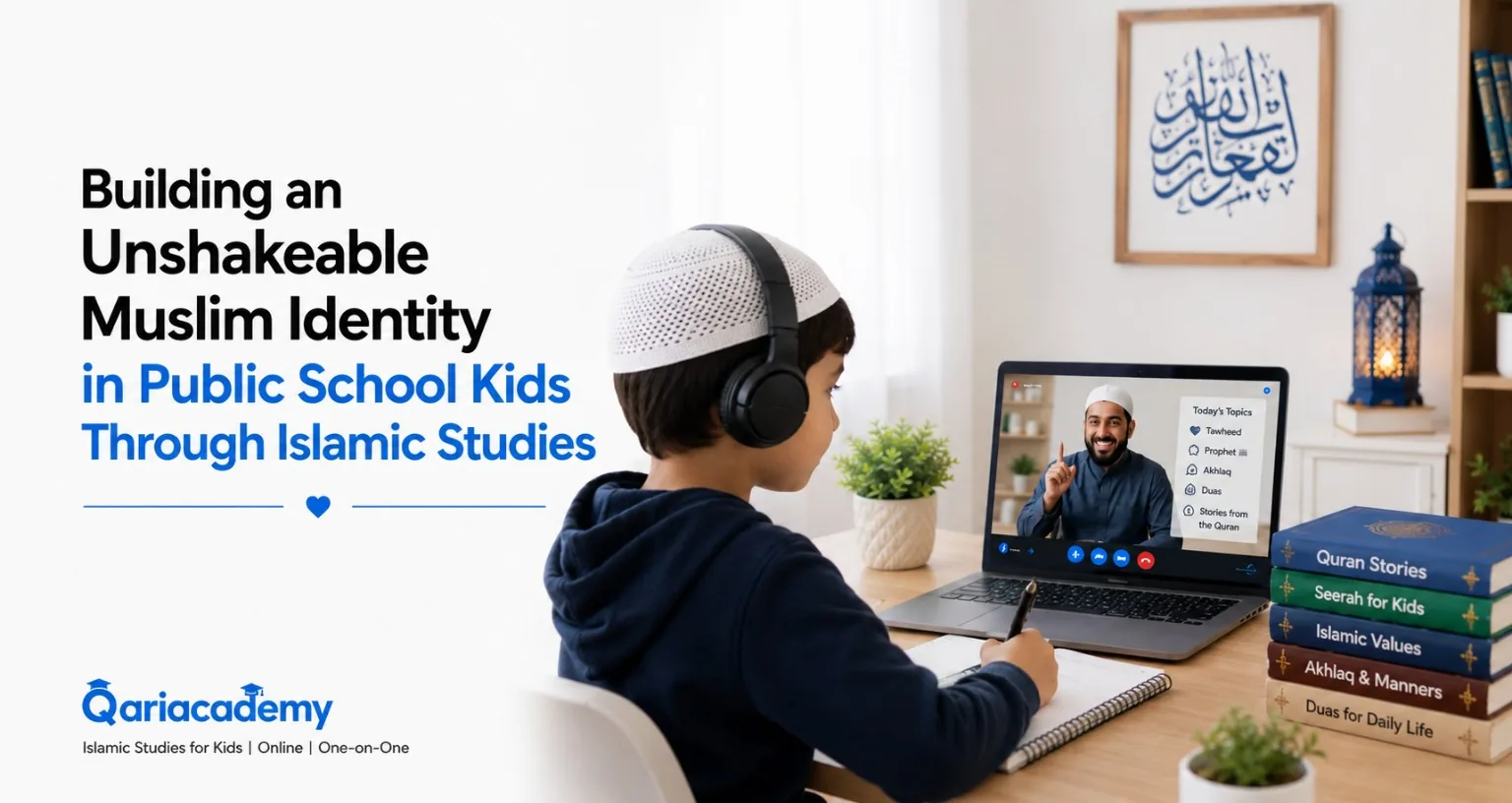
Navigating the modern education system presents a distinct set of opportunities and obstacles for Muslim families residing in secular societies. Every morning, millions of Muslim children step out of their homes and into public school classrooms where secular values, competing moral frameworks, and peer pressure dominate daily interactions. While public schools offer strong academic preparation, they rarely provide a spiritual or moral compass aligned with Islamic principles. This creates a critical responsibility for parents: building an unshakeable Muslim identity in public school kids through Islamic studies must become an intentional, daily priority rather than an afterthought.
Without a deliberate strategy to anchor children in their faith, public school students risk developing a fragmented identity. They may act one way at home and mosque, while adopting an entirely different persona at school to fit in with their peers. Over time, this dual identity breeds confusion, hesitation, and self-doubt regarding their Islamic beliefs.
- The Reality of Cultural Assimilation: Public school environments naturally encourage assimilation into mainstream popular culture. Unfiltered social media trends, secular philosophical viewpoints, and normative behaviors often conflict directly with core Islamic values.
- The Identity Gap: When kids lack a firm understanding of why they pray, dress modestly, or eat halal, peer pressure easily erodes their confidence. They begin to view Islamic practices as burdensome restrictions rather than honorable privileges.
- The Solution Through Structured Learning: Building an unshakeable Muslim identity in public school kids through Islamic studies bridges this gap. Systematic, age-appropriate learning provides the intellectual and spiritual shield necessary to navigate complex public school settings with pride.
Understanding the Core Components of Islamic Identity
A resilient identity is not built on passive cultural heritage; it is forged through active comprehension of Islamic theology (‘Aqeedah), character ethics (Akhlaq), and practical worship (Ibadah). When public school students understand the rationale behind their beliefs, their faith shifts from dynamic peer imitation to unshakeable conviction.
| Identity Pillar | Role in Public School Environment | Outcome of Structured Islamic Studies |
| Authentic ‘Aqeedah (Belief) | Answers big existential questions (purpose of life, creator, accountability). | Immunity against moral confusion, secular nihilism, and ideological doubts. |
| Practical Fiqh (Understanding) | Guides daily decisions (halal food, prayer times at school, modesty). | Confidence to perform prayer and uphold halal standards without embarrassment. |
| Prophetic Character (Akhlaq) | Shapes interactions with non-Muslim teachers, classmates, and neighbors. | Excellence in manners, resilience against bullying, and positive representation of Islam. |
When kids attend public school, they encounter varying perspectives on ethics, origin, and social conduct. A child who has not engaged in building an unshakeable Muslim identity in public school kids through Islamic studies may feel overwhelmed when challenged about their faith. Conversely, a child equipped with Quranic knowledge and Prophetic tradition views these moments as opportunities to practice patience, display good character, and speak with wisdom.
The Role of Quranic Literacy in Identity Formation
The Quran is not simply a book to be recited; it is a live guidance system. For a public school student, learning to read, memorize, and understand the Quran in Arabic offers a direct connection to Allah. It reminds them daily of their true purpose beyond academic grades, athletic achievements, or popularity contests.
- Developing Cognitive Resilience: Regular Quran study sharpens memory, discipline, and critical thinking—skills that directly enhance academic performance in public school subjects.
- Spiritual Grounding: Reciting Quranic verses daily instills tranquility (Sakeenah), protecting young minds from anxiety and social pressure.
- Intellectual Immunity: Understanding Quranic stories (such as the People of the Cave or Prophet Yusuf) teaches youth how believers historically maintained their faith in non-believing or challenging societies.
Achieving this level of mastery requires consistent guidance from qualified instructors who understand how to engage young minds living in Western or secular environments. Building an unshakeable Muslim identity in public school kids through Islamic studies requires structured online or offline programs tailored specifically for busy public school schedules.
This is where structured digital learning platforms revolutionize Islamic education for modern families. By enrolling your child in QariAcademy, you give them direct access to expert Quran and Islamic studies tutors who specialize in building confidence and authentic Islamic knowledge in public school students. QariAcademy offers personalized, one-on-one interactive courses in Quranic recitation, Tajweed, Arabic language, and foundational Islamic studies—designed flexibly around your child’s school timetable.
Overcoming Secular Challenges & Intellectual Empowerment
As public school students transition from elementary to middle and high school, the nature of their challenges shifts dramatically from simple social fitting-in to deep intellectual and philosophical questioning. Public school curricula naturally expose students to secularism, liberalism, evolution, and varying ethical frameworks. Without an intellectually grounded understanding of their own faith, students can easily fall into doubt. Therefore, building an unshakeable Muslim identity in public school kids through Islamic studies requires shifting from basic memorization to deep, rational engagement with Islamic theology (‘Aqeedah) and history.
Public school environments reward critical thinking, debate, and scientific inquiry. If a young Muslim’s religious education remains limited to childhood stories and surface-level rules, they will perceive Islam as inadequate for answering modern, complex life questions.
- Addressing Doubts Proactively: Children naturally develop questions about science, God’s existence, the problem of evil, and social justice. Parents and teachers must create safe spaces where these questions are welcomed and addressed with rational, textual clarity.
- Reframing Science and Faith: Public schools often present science and religion as inherently conflicting concepts. Structured Islamic studies teach youth that Islamic civilization historically pioneered scientific discovery precisely because of Quranic encouragement to ponder creation.
- Navigating Ideological Trends: From shifting moral standards to contemporary social movements, students need a solid Islamic filter to evaluate what aligns with Divine revelation versus what stems from subjective societal norms.
Transforming Public School Challenges into Spiritual Strength
Rather than viewing the secular public school environment solely as a threat, parents can leverage it as a training ground for character development and intellectual maturity. Building an unshakeable Muslim identity in public school kids through Islamic studies empowers students to act as confident, articulate ambassadors of Islam (Dawah) through their character and intelligence.
| Secular Challenge | Traditional Response (Passive) | Identity-Building Response (Active via Islamic Studies) |
| Peer Pressure to Conform | Isolation or silent compromise. | Strong sense of honor (Izzah) in being distinct and morally upright. |
| Philosophical Doubts | Fear of asking questions; suppression. | Intellectual inquiry using Quranic logic, classical scholarship, and rational defense. |
| Schedule Conflicts (Salat/Ramadan) | Skipping prayers or hiding fasts. | Confident advocacy for accommodation, educating teachers and peers gracefully. |
The Strategic Importance of Islamic History and Sirah
A core pillar of building an unshakeable Muslim identity in public school kids through Islamic studies is the study of the Prophet’s biography (Sirah) and Islamic history. When children learn how early Muslims held firm to their principles under extreme social pressure in Mecca, their own daily struggles in public school pale in comparison.
- Real-World Role Models: Studying the lives of the Companions (Sahabah) replaces modern pop-culture figures with authentic role models who embodied courage, intellect, and spiritual devotion.
- Historical Pride: Learning about the Golden Age of Islam instills pride in Islamic heritage, eliminating any sense of inferiority when studying Western history in public school classrooms.
- Resilience in Adversity: The Prophet’s methodical, patient approach to building a community teaches youth how to navigate hostility, microaggressions, and misunderstanding with grace and strength.
Integrating this level of structured learning into a public school student’s routine demands specialized guidance that bridges classical knowledge with contemporary realities. Public school schedules leave limited time, making efficient, expert-led instruction essential for long-term retention and engagement.
This is why enrolling your child in QariAcademy is a game-changer for working families. QariAcademy connects your child with qualified, English-fluent Islamic scholars and Quran tutors who understand the Western public school context. Through interactive 1-on-1 online sessions, QariAcademy helps youth tackle modern intellectual challenges, master Tajweed, and internalize core Islamic studies—turning potential public school peer pressure into an unshakeable foundation of faith and leadership.
Practical Routine, Character Building & Time Management
Knowledge without practical application remains theoretical. For public school students who spend six to eight hours a day in a secular academic environment, turning Islamic knowledge into daily habits is the key to long-term spiritual survival. Building an unshakeable Muslim identity in public school kids through Islamic studies requires transforming abstract concepts into actionable, routine practices that seamlessly fit into a student’s daily life without compromising their academic excellence.
Balancing public school homework, extracurricular activities, and Islamic studies can feel overwhelming for both parents and children. However, with structured time management and intentional routines, public school students can excel academically while deepening their relationship with Allah.
- Establishing the Daily Prayer (Salat): Prayer serves as the ultimate anchor. Teaching children how to respectfully request a quiet space at school for Dhuhr or Asr prayer builds courage, self-advocacy, and an unwavering commitment to their faith.
- Morning and Evening Remembrances (Adhkar): Equipping kids with simple daily supplications instills a continuous consciousness of Allah (Taqwa) as they walk through public school hallways, protecting them from negative influences and anxiety.
- Halal and Modest Living: Understanding the wisdom behind Islamic dietary laws and modest dress converts potential social awkwardness into a source of personal dignity and obedience to the Creator.
Integrating Islamic Character (Akhlaq) into Public School Life
The most visible sign of a firm Islamic identity in a public school setting is exemplary behavior. Islamic studies should not merely focus on rules; it must cultivate kindness, honesty, academic integrity, and leadership. When public school teachers and peers witness a Muslim student’s outstanding morals, it dispels stereotypes and opens doors for positive dialogue.
| Life Aspect | Secular Public School Norm | Islamic Standard (Cultivated via Islamic Studies) |
| Academic Ethics | Competition, occasional cheating or shortcutting. | Absolute honesty, viewing study as worship (Ibadah), striving for excellence (Ihsan). |
| Social Dynamics | Gossiping, exclusion, peer pressure, cyberbullying. | Kindness, defending the mistreated, maintaining pure speech and respectful boundary. |
| Teacher Relations | Casual or transactional attitude toward authority. | Deep respect, gratitude, and humility toward educators and mentors. |
Designing a Balanced Daily & Weekly Routine
To prevent burnout, parents must help public school students establish a predictable, manageable schedule. Building an unshakeable Muslim identity in public school kids through Islamic studies does not require hours of daily lectures; rather, it thrives on small, consistent, high-quality learning sessions that respect the child’s public school workload.
- The 15-Minute Morning Rule: Dedicate 15 minutes after Fajr prayer to Quran recitation or memorization before preparing for the school bus.
- Post-School Reset: Allow time for relaxation and public school homework completion before shifting to evening Islamic studies or Quran review.
- Weekend Deep Dives: Utilize weekends for broader topics such as Islamic history, Sirah, and interactive family discussions regarding challenges faced during the school week.
Maintaining this level of consistency requires structured support, specialized curricula, and expert mentors who know how to keep young public school students engaged after a demanding academic day.
This is precisely where QariAcademy provides the perfect solution for busy households. QariAcademy offers custom-tailored, flexible online Islamic education designed specifically around public school schedules. Whether your child needs structured Quranic Tajweed, Arabic language training, or interactive Islamic character building, QariAcademy delivers high-impact, bite-sized 1-on-1 sessions with expert tutors. Empower your child to stand tall in public school by giving them the gift of structured knowledge through QariAcademy.
Family Support, Future Resilience & Final Call to Action
The home environment serves as the ultimate nursery where religious values are either reinforced or diluted. While external tutors, institutions, and curricula play a crucial role, building an unshakeable Muslim identity in public school kids through Islamic studies requires an active, supportive, and empathetic home culture. Parents cannot delegate identity formation entirely to external sources; rather, they must create a domestic sanctuary where Islamic principles are lived, celebrated, and discussed openly.
Public school students experience intense social conditioning throughout the week. When they return home, they need a safe space where they feel understood, valued, and grounded in their faith without fear of immediate harsh judgment when they share their school struggles.
- Open Communication Channels: Parents must encourage children to discuss difficult topics encountered at school—such as peer pressure, conflicting moral views, or feeling left out—without reacting with anger or panic.
- Leading by Example: Children imitate what they observe. When parents prioritize prayer, Quran recitation, and moral integrity in their own daily lives, public school kids naturally view Islam as a practical priority rather than a set of abstract rules.
- Creating a Positive Islamic Environment: Celebrating Islamic holidays with enthusiasm, hosting family halaqahs, and organizing wholesome social activities with righteous peers helps kids build fond, lasting memories associated with their faith.
Long-Term Impact: Preparing Youth for the Global Stage
The ultimate objective of building an unshakeable Muslim identity in public school kids through Islamic studies extends far beyond high school graduation. It prepares young Muslims to enter universities, corporate workplaces, and diverse global communities as confident leaders who contribute positively to society while remaining unwavering in their belief.
| Phase | Public School Challenge | Long-Term Result of Strong Islamic Studies |
| Middle & High School | Fitting in, handling identity crises, secular social trends. | Strong self-esteem, clarity of purpose, resistance to negative peer influences. |
| Higher Education | Exposure to aggressive ideological debate and skepticism. | Intellectual maturity, rational confidence in Islamic principles, leadership capacity. |
| Professional Life | Ethical dilemmas, maintaining values in secular workplaces. | Uncompromising moral integrity, high work ethic (Ihsan), active community contribution. |
Investing in your child’s Islamic education during their public school years yields lifelong returns. It equips them with spiritual resilience, moral clarity, and an unwavering connection to Allah that guides them through every future milestone.
Empower Your Child’s Journey Today
Navigating public school while maintaining a vibrant Islamic identity does not have to be a struggle for your family. Building an unshakeable Muslim identity in public school kids through Islamic studies is made simple, accessible, and highly effective through QariAcademy.
QariAcademy provides a comprehensive online learning ecosystem tailored to fit seamlessly into your child’s public school routine. With live, one-on-one sessions led by certified, English-fluent scholars, QariAcademy empowers students with master-level Quranic recitation, Tajweed, Arabic literacy, and practical Islamic studies. Give your child the intellectual confidence, spiritual strength, and noble character they need to thrive in public school and beyond. Visit QariAcademy today to book your free trial class and take the first step in securing your child’s Islamic future!