Table of Contents
Introduction
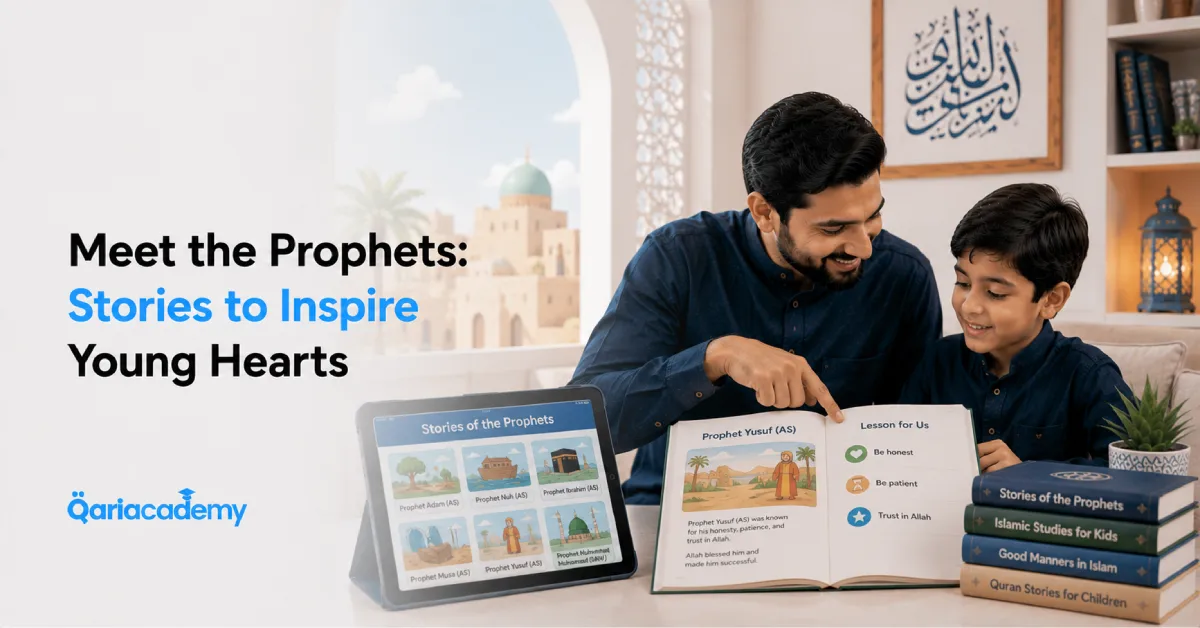
Teaching kids stories of the Prophets is one of the most powerful ways to inspire faith, build character, and nurture love for Islam in their hearts. Through these timeless stories, children can understand Islamic history in a simple, engaging, and relatable way. More importantly, they learn values such as patience, honesty, courage, and trust in Allah.
Children naturally connect with stories. When they hear about the lives of the Prophets, they not only gain knowledge but also begin to imitate the beautiful morals and actions of these role models. Whether it’s Prophet Yusuf’s patience, Prophet Ibrahim’s courage, or Prophet Muhammad’s mercy, every story leaves a lasting impression.
👉 Before you begin, we recommend starting with these guides to set a strong foundation:
Why Prophet Stories Matter for Kids
Prophet stories are not just bedtime tales; they are lessons for life. For children, hearing about Prophets makes faith feel alive. Here’s why these stories are essential:
- They Provide Role Models – Prophets exemplify ideal human behavior. Kids naturally look up to them.
- They Teach Morals in Context – Instead of abstract lectures, stories show morals in action.
- They Strengthen Faith – Stories help children see Allah’s wisdom and mercy in real-life situations.
- They Connect Children to the Qur’an – Many Prophet stories are found in the Qur’an, creating a direct bond.
- They Build Identity – Children feel proud of their faith when they know these powerful stories.
Step 1: Start with Simple Stories
When teaching kids stories of the Prophets, simplicity is key. Children cannot absorb complex details, so focus on one or two Prophets at a time.
- Keep it Age-Appropriate: Use short sentences and familiar vocabulary.
- Focus on Morals: Highlight the key lesson instead of lengthy details.
- Example: Teach Prophet Yusuf’s story of patience. Say: “He trusted Allah even when life was very hard, and Allah helped him in the end.”
💡 Tip for Parents: Retell the same story in different ways (spoken, picture book, or a short video) to reinforce understanding.
Step 2: Use Visual Aids
Children are visual learners. Adding images, colors, and illustrations makes stories memorable.
- Illustrated Books: Invest in children’s Islamic storybooks.
- Flashcards: Create Prophet name cards with key lessons (e.g., Musa – Bravery).
- Draw Together: Let your child draw what they learned from a story.
👉 You can also use color-coded symbols:
- 🌟 = Miracle
- ❤️ = Good moral action
- ⚔️ = Challenge faced
This way, children remember the lessons more clearly.
Step 3: Interactive Activities
Children learn best when they are active participants. After telling a Prophet’s story, engage them with fun activities.
- Role-Play: Let children act out the story. Example: pretend to be Prophet Ibrahim standing bravely for the truth.
- Story Quizzes: Ask simple questions: “Who showed patience in prison?” – “Prophet Yusuf!”
- Matching Games: Match Prophet names with their main lessons.
🔗 Internal Link: Combine with Understanding Allah’s Names and Attributes to show how each Prophet reflected Allah’s qualities (e.g., Yusuf showed Allah’s mercy).
Step 4: Reflection and Discussion
Once the story is shared, guide your child into deeper thinking.
- Ask Open-Ended Questions: “What would you do if you were in that situation?”
- Discuss Morals: “Why is honesty important, like Prophet Muhammad taught us?”
- Relate to Daily Life: Encourage children to connect the lesson with school, siblings, or playtime.
💡 Example: If they learned about Prophet Musa’s courage, ask: “How can you be brave in school if you see someone being treated unfairly?”
Step 5: Short Recaps and Repetition
Children remember through repetition. Each time you repeat, the story becomes more deeply rooted.
- Summarize in 2 Minutes: At the end of the day, remind your child of the main lesson.
- Encourage Retelling: Ask your child to narrate the story in their own words.
- Build a Story Journal: Let children keep a small notebook of what they’ve learned after each story.
Bonus Tips
- Keep each session short (5–10 minutes).
- Use rhymes or songs to reinforce the key lessons.
- Celebrate small achievements with praise or stickers.
- Create a family tradition: “Prophet Story Friday Night.”
Challenges Parents Face When Teaching Prophet Stories
Many parents struggle with teaching kids stories of the Prophets because they don’t know where to start. Here are some common challenges and solutions:
- Stories Feel Too Complex
- Solution: Simplify the story into 3 parts – Problem, Prophet’s Response, and Lesson.
- Children Lose Interest
- Solution: Add visuals, interactive questions, or short activities.
- Parents Lack Confidence
- Solution: Use ready-made resources like storybooks or online classes.
- Balancing Detail and Morals
- Solution: Focus on morals first. Add details later when the child matures.
Benefits of Teaching Prophet Stories Early
- Moral Development – Children internalize values like honesty and kindness.
- Stronger Bond with Islam – Stories connect children emotionally to their faith.
- Better Memory – Kids remember lessons longer when attached to stories.
- Improved Behavior – Kids model good actions from Prophets in daily life.
- Family Bonding – Storytelling becomes a shared activity between parents and children.
At QariAcademy, we make teaching kids stories of the Prophets exciting, interactive, and memorable. With experienced teachers and engaging methods, your child will not only learn the stories but also live by their morals.
👉 Enroll today and begin your child’s journey with the inspiring stories of the Prophets!
FAQ: Teaching Kids Stories of the Prophets
1. What age is suitable?
5–10 years old.
2. Can non-Arabic speakers understand?
Yes, stories are simplified and translated.
3. How many Prophets per session?
1–2 for focus.
4. Should we include visuals?
Yes, illustrations reinforce understanding.
5. How often to repeat stories?
Daily or weekly for retention.
6. Can siblings participate?
Yes, it encourages discussion.
7. How to handle questions children ask?
Answer simply and encourage curiosity.
8. Should we focus on morals or details?
Focus on morals first, details later.
9. Can we combine with activities?
Yes, role-play and drawing enhance learning.
10. How long until children show interest?
Usually immediately if stories are engaging.
11. Can Prophet stories improve behavior?
Yes, children imitate good actions.
12. Do we need formal resources?
Not always; simple storytelling works too.
13. How long should each session be?
10–15 minutes maximum.
14. Can Prophet stories be bedtime stories?
Absolutely, bedtime is perfect.
15. Do children need prior knowledge?
No, you can start from basics.