Losing interest in Quran classes is rarely sudden; it’s usually the result of “spiritual burnout,” repetitive teaching methods, or a lack of understanding. This article breaks down the 5 major reasons behind this “slow fade” and provides actionable solutions. QariAcademy solves this by replacing the boring, mechanical approach with interactive, heart-centered learning that makes children look forward to every session.
The Mystery of the Vanishing Enthusiasm
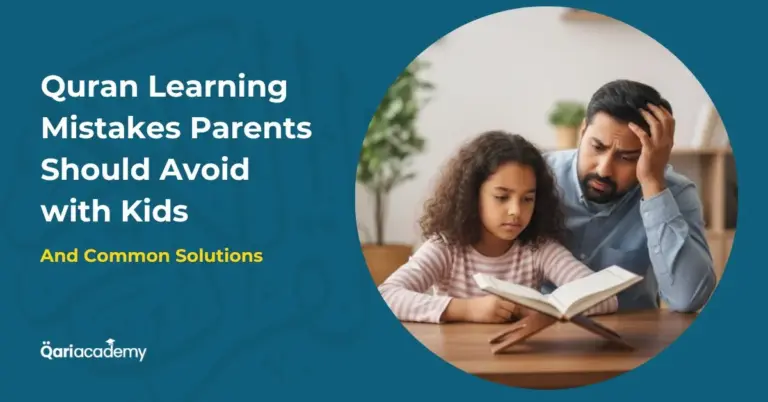
Every parent remembers the first day of Quran classes. The new prayer mat, the crisp Mus’haf, and the child’s excitement to start. But fast forward six months, and that enthusiasm has turned into a slow, grinding resistance.
Why Muslim Kids Slowly Lose Motivation in Quran Classes is a question that keeps many parents awake at night. Is it the teacher? The method? Or is it something deeper? Understanding the “slow fade” is essential to saving your child’s relationship with the Quran.
1. The “Academic Burnout” Overlap
Our children are the most “scheduled” generation in history. Between school, sports, and homework, adding a rigid Quran schedule can feel like the “last straw.” When Quran classes feel like “School 2.0,” children naturally start to resist.
The QariAcademy Difference: At QariAcademy, we don’t believe in “one size fits all.” We offer flexible sessions that fit into your child’s life when they are most mentally fresh. By keeping sessions focused and engaging, we prevent the burnout that traditional, long-hour classes often cause.
2. The “Translation Gap”: Learning Without Meanin
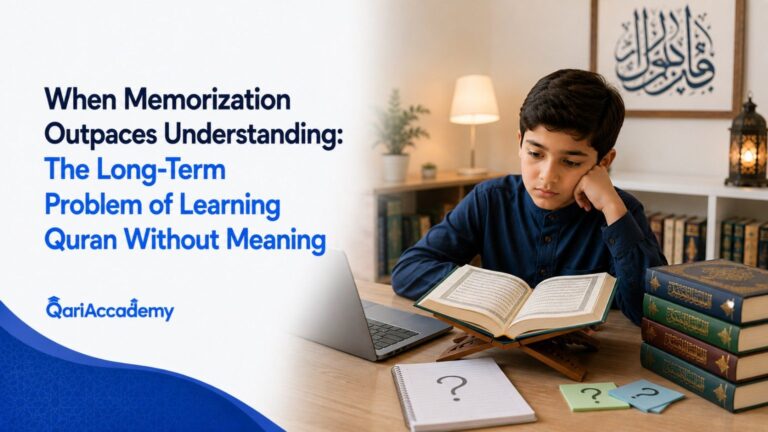
One of the primary reasons Why Muslim Kids Slowly Lose Motivation in Quran Classes is that they are often taught to read and memorize sounds they don’t understand. Imagine trying to memorize a book in a language you don’t speak for years—you would lose motivation too.
How QariAcademy Bridges the Gap: We integrate Contextual Tafseer into our lessons. When a child learns the story of the People of the Elephant or the bravery of Prophet Musa, the verses they memorize become a movie in their minds. They are no longer just “words”; they are “wonders.”
3. The Lack of Positive Reinforcement
In many traditional settings, the only feedback a child receives is a correction of a mistake. Over time, the child associates the Quran with “failure” or “being wrong.”
Motivation at QariAcademy: Our teachers are trained to celebrate small wins. Whether it’s mastering a difficult Tajweed rule or finishing a short Surah, we use positive reinforcement to build a child’s confidence. A confident child is a motivated child.
4. Digital Boredom in a High-Tech World
Let’s be honest: a static book is competing with high-definition video games and interactive apps. If the Quran class is just a teacher repeating “Read again,” the child’s brain will naturally seek more stimulating input elsewhere.
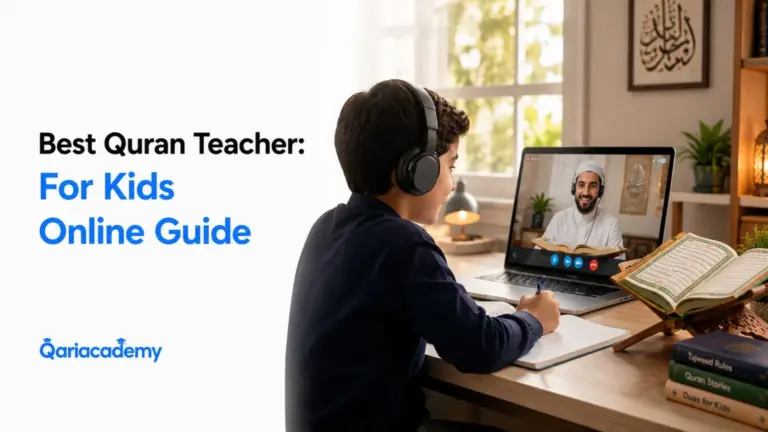
The QariAcademy Experience: We utilize modern educational tools, interactive screens, and gamified learning paths. At QariAcademy, we meet the kids where they are—in the digital age—but with the sacred content of the Quran.
5. The “Destination” vs. The “Journey”
Many kids lose motivation because they feel the journey is never-ending. They don’t see the progress they are making.
The QariAcademy Solution: We provide clear milestones and progress reports. Both parents and students can see exactly where they are on their path. This sense of “leveling up” is a powerful psychological tool that keeps the momentum going.
Conclusion: Reigniting the Flame
Understanding Why Muslim Kids Slowly Lose Motivation in Quran Classes isn’t about pointing fingers—it’s about pivoting our strategy. We want our children to turn to the Quran for comfort throughout their lives, not just to pass a test.
QariAcademy is here to ensure that your child’s first steps with the Quran lead to a lifelong journey of love and understanding. Don’t wait for the motivation to disappear completely.
[Give your child the gift of a motivated heart—Register for a Trial Class at QariAcademy today!]