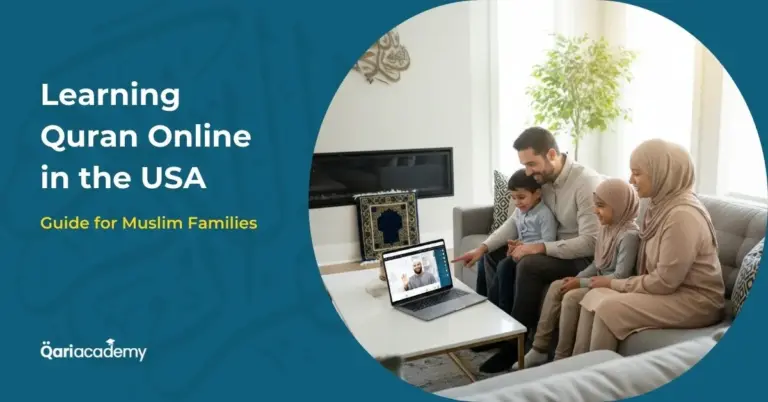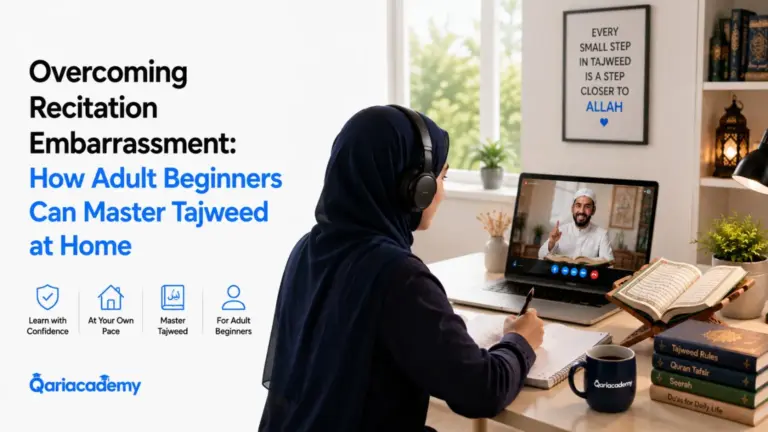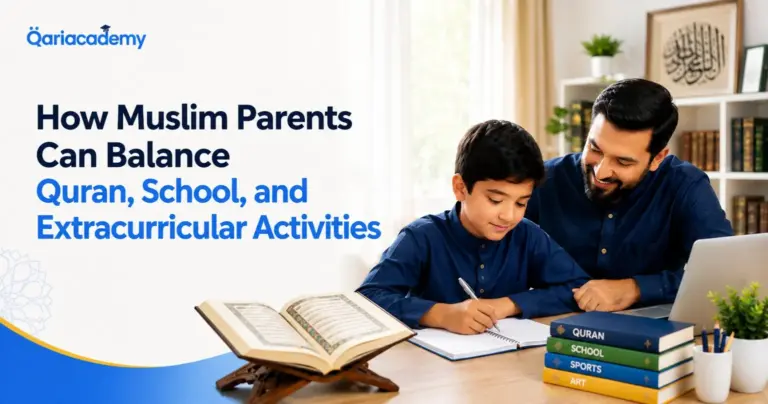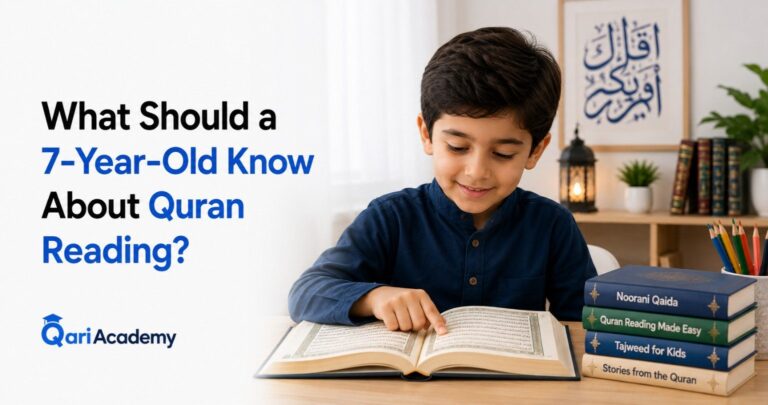
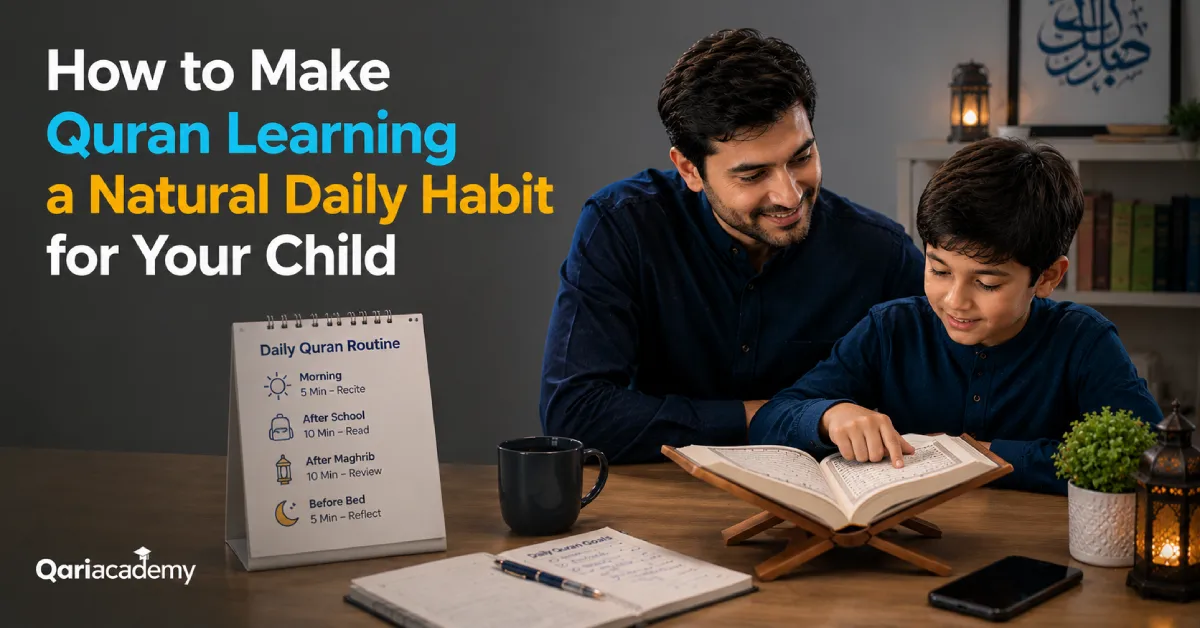
Consistency is the secret to long-term success in Hifz. However, forcing “study time” often leads to resistance. How to Make Quran Learning a Natural Daily Habit for Your Child involves integrating the Quran into the existing rhythm of the home. This article shares five practical strategies to build a seamless Quran habit and explains how QariAcademy’s flexible, engaging sessions act as the perfect “anchor” for your child’s daily spiritual routine.
The Secret of “Micro-Habits”
Most parents fail at making Quran a habit because they aim for “perfection” instead of “consistency.” They try to schedule long, intensive sessions that are difficult to maintain. In the world of habit formation, smaller is better.
Making the Quran a natural part of life isn’t about the length of the session; it’s about the frequency. It’s about moving from “Quran as a class” to “Quran as a lifestyle.”
1. Use “Habit Stacking”
One of the most effective psychological techniques for building habits is Habit Stacking—attaching a new habit (Quran) to an already established one.
- The Strategy: Don’t just say “we will read Quran today.” Instead, say “We will read 3 Ayahs immediately after breakfast” or “We will listen to the Surah while driving to school.”
- The QariAcademy Edge: Our classes are designed to fit into your schedule. By booking your QariAcademy sessions at the same time each week, you create a “Spiritual Anchor” that the rest of the day revolves around.
2. Create a “Sacred Space”
Environment dictates behavior. If a child has to search for their Mus’haf or find a quiet spot every time, the “friction” will stop the habit.
- The Strategy: Set up a small, comfortable corner dedicated to Quran. Keep the tablet (for QariAcademy), the Mus’haf, and maybe some nice prayer beads or a scent diffuser there.
- The QariAcademy Edge: Because our platform is digital, that “Sacred Space” can be anywhere. Whether you are at home or traveling, the QariAcademy classroom is just one click away, maintaining the habit even when your environment changes.
3. Focus on “Low Friction” Entry
The hardest part of any habit is starting.
- The Strategy: The “Two-Minute Rule.” Tell your child, “Let’s just do two minutes of review.” Usually, once they start, they will continue. The goal is to make the barrier to entry as low as possible.
- The QariAcademy Edge: We make starting easy. Our teachers are trained to “warm up” the student with a story or a quick game. By the time the “hard work” of Hifz begins, the child is already engaged and the friction is gone.
4. Make it a Family Affair (The “Mirror” Effect)
Children don’t do what we say; they do what we do.
- The Strategy: If your child sees you reading your own Quran or attending your own classes, they will view it as a normal adult activity they want to mimic.
- The QariAcademy Edge: We encourage parental involvement—not as “supervisors,” but as “cheerleaders.” When you show interest in what they learned in their QariAcademy session, you validate the habit and give it social value within the family.
5. Celebrate “Streaks,” Not Just Results
In the beginning, reward the act of showing up, not just the quality of the recitation.
- The Strategy: Use a visual habit tracker or a “Quran Jar.” For every day they complete their daily goal (even if it’s just one Ayah), they get a sticker or a token.
- The QariAcademy Edge: Our platform tracks progress automatically. At QariAcademy, we celebrate the “Consistency Milestones.” Whether it’s their 10th session in a row or completing a small Surah, we make sure the child feels the “Dopamine Hit” of a job well done.
Conclusion: Small Steps, Giant Rewards
How to Make Quran Learning a Natural Daily Habit for Your Child is about playing the long game. A child who reads for 15 minutes every single day with love will surpass a child who reads for 3 hours once a week with resentment.
At QariAcademy, we specialize in building these sustainable habits. We take the pressure off the parents and provide the structure, the motivation, and the mentorship needed to make the Quran a permanent, beloved part of your child’s identity.