TL;DR (Too Long; Didn’t Read)
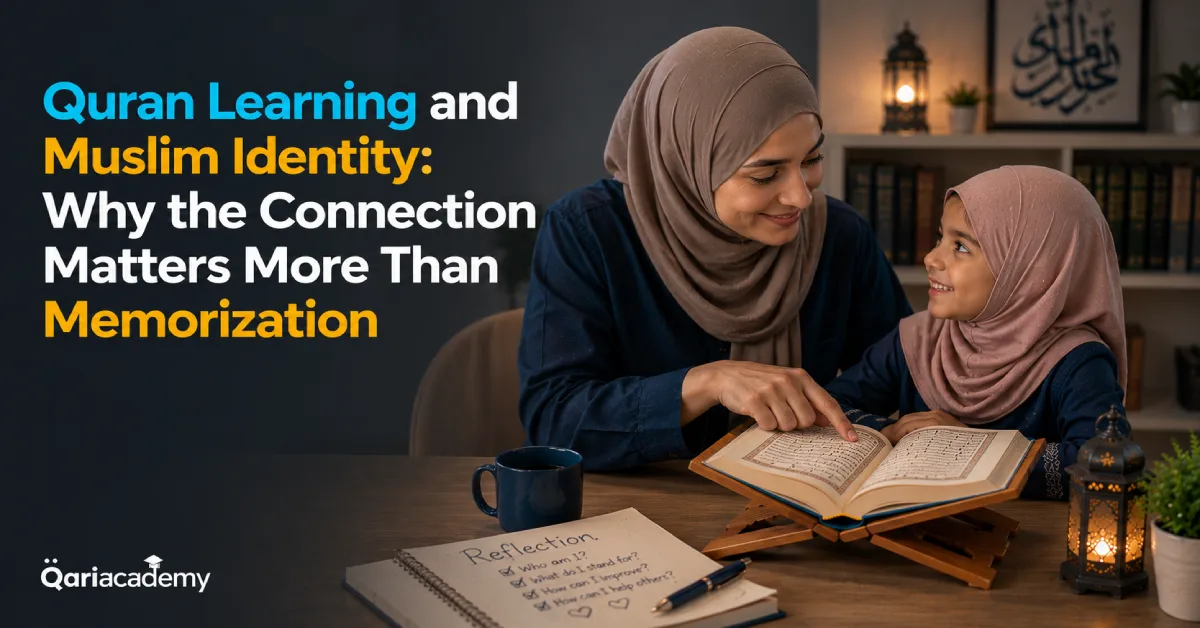
While memorizing the Quran is a noble pursuit, it is only half of the journey. Without a strong connection to one’s identity, verses are just words on a page. Quran Learning and Muslim Identity: Why the Connection Matters More Than Memorization is about ensuring the Quran shapes a child’s worldview, values, and sense of belonging. This article explores how QariAcademy prioritizes identity-building, ensuring that every student doesn’t just “carry” the Quran, but “lives” it.
The Difference Between a “Hafidh” and a “Muslim Personality”
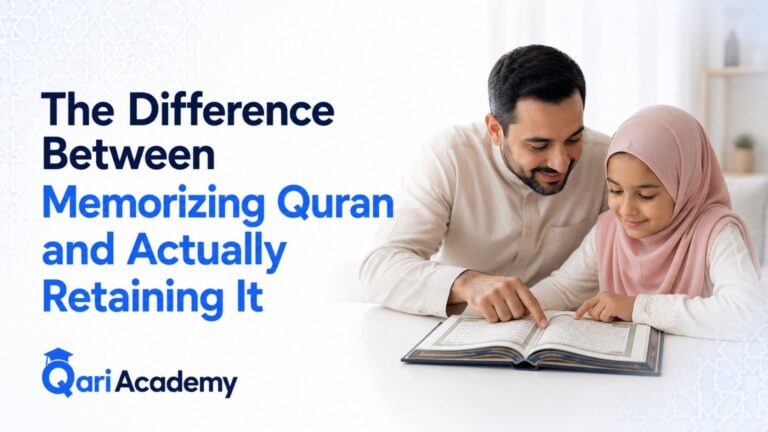
We have all seen children who can recite Juz’ after Juz’ with perfect Tajweed, yet they struggle to explain what it means to be a Muslim in their daily life. This is the result of focusing on Memorization (Hifz) while neglecting Identity (Huwiyyah).
Quran Learning and Muslim Identity are two sides of the same coin. If we teach the letters but lose the connection to the heart, we risk raising a generation that knows the Quran but doesn’t feel it belongs to them.
1. Moving From “Task” to “Transformation”
For many kids, Quran class is just another task on their to-do list, like math or science homework.
- The Problem: When the Quran is treated as a subject to be “finished,” its impact on the child’s identity is minimal.
- The QariAcademy Approach: We treat the Quran as a Life Manual. Our teachers connect verses to real-world situations—how to handle a disagreement with a friend, how to be honest in sports, and how to care for the environment. At QariAcademy, the Quran moves from the “to-do list” to the “to-be list.”
2. The “Why” Behind the “What”
Identity is built on understanding. A child who knows why they are memorizing is a child who is proud of their identity.
- The Problem: Rote memorization without understanding leads to spiritual burnout.
- The QariAcademy Approach: We prioritize Tafsir-lite (Understanding). Before we dive into memorization, we explain the story and the message. When a child understands the majesty of Allah or the trials of the Prophets, they don’t just memorize sounds; they adopt the values of those Prophets into their own identity.
3. Belonging to a Global Legacy
Identity is deeply tied to the feeling of “belonging.”
- The Problem: Muslim kids in modern societies often feel like “islands.” They don’t realize they are part of a 1,400-year-old legacy of greatness.
- The QariAcademy Approach: We frame Quran learning as an Inheritance. We tell our students: “You are now a guardian of the same words that changed the world.” This sense of responsibility builds a powerful, positive identity that makes the child feel honored to be Muslim.
4. Identity as a Shield Against Peer Pressure
A child with a weak identity will always try to mimic those around them. A child with a Quranic identity has an internal compass.
- The Problem: Without a strong link between Quran and Identity, kids “hide” their faith to fit in.
- The QariAcademy Approach: We build Confident Conviction. By showing how the Quran’s values (honesty, courage, kindness) are universally respected, we help students realize that their Islamic identity is their greatest asset in any social circle.
5. The Teacher as a Mirror of Identity
Children don’t just learn from books; they learn from people.
- The Problem: A teacher who is strictly focused on “correcting mistakes” doesn’t provide a model for identity.
- The QariAcademy Approach: Our mentors are Identity Coaches. They share their own experiences of how the Quran guided them. At QariAcademy, the teacher is a living example of a “Modern Muslim Identity”—someone who is professional, kind, and deeply connected to Allah.
Conclusion: Raising a Generation of “Living Qurans”
Quran Learning and Muslim Identity: Why the Connection Matters More Than Memorization is a reminder that our ultimate goal is to raise children like the Sahaba—people whose characters were the Quran in motion.
At QariAcademy, we celebrate the Hifz, but we cherish the Identity. We are here to help you raise children who are not just “walking libraries,” but beacons of light and confidence in their communities.