Table of Contents
Every Muslim parent dreams of seeing their child open the Quran willingly—not because they were told to, but because they genuinely love reading it.
For Muslim parents USA raising children in a fast-paced, western environment, this goal can sometimes feel difficult. Children today grow up surrounded by school pressure, sports, social media, video games, and endless digital distractions. Parents often worry that the Quran may begin to feel like just another chore or assignment on an already busy schedule.
The good news is that children are naturally curious and open-hearted. When the Quran is introduced with love, patience, and consistency, it becomes a comforting anchor and one of the most meaningful parts of their lives.
Helping your child love the Quran is not about creating pressure—it is about creating positive, cherished memories.
Why Muslim Families in the USA Need a Unique Approach
Raising children in the United States offers incredible opportunities that parents admire: American schools encourage creativity, critical thinking, and independence. Children have access to great educational resources, libraries, and sports leagues.
At the same time, raising Muslim children means recognizing that Islamic values are not always reinforced outside the home.
This doesn’t mean parents should fear society or isolate their children. Instead, it highlights the importance of building a strong Islamic foundation at home—one that gives children confidence, wisdom, and a clear sense of identity. The Quran plays the central role in building that foundation. When children regularly read and reflect on the Quran, they carry its guidance wherever they go—in the classroom, on the sports field, or with their friends.
Love Comes Before Memorization
Many parents believe their child’s success depends solely on how many pages or surahs they memorize. In reality, the strongest, most resilient foundation is love.
- A child who truly loves the Quran will continue reading it as a teenager and an adult.
- A child who memorizes quickly but associates the Quran with stress may stop reading it later in life.
That is why successful Quran memorization for kids USA begins with nurturing genuine affection for the Book of Allah long before focusing on high quantity.
Balancing School, Sports, and Quran Learning
One of the biggest concerns among Muslim mothers USA is time. Children leave for school early, return in the late afternoon, and face hours of homework, sports practice, and family duties.
Parents often wonder: “Is there really enough time for Quran learning?”
The answer is yes. The key is not finding more hours—the key is using small, available moments with consistency.
Children rarely need hours of continuous study each day to make remarkable progress:
- 15 minutes after Fajr or during breakfast.
- 20 minutes after Maghrib.
- 5 to 10 minutes of listening to recitation during the drive to school.
These small daily habits, repeated consistently over a year, yield incredible results without overwhelming your child.
Be the Example Your Child Needs
Children imitate far more than they obey. If your child regularly sees you reading the Quran after Fajr, listening to recitation in the car, or reflecting on its meanings, they receive an unspoken, powerful message:
“The Quran is a core part of our family’s identity.”
You don’t need to give long lectures on Islamic parenting. Your daily actions speak much louder than words. Even reading a few verses each day where your child can see you leaves a lasting impression on their heart.
Teach the Meaning Alongside Memorization
Children naturally ask questions: What does this verse mean? Why did Allah mention this story? Who was Prophet Musa?
Answering these questions transforms mechanical repetition into deep understanding. Imagine a child learning Surah Al-Asr. Instead of just repeating the words, ask simple questions:
- What is Allah teaching us about the value of time?
- Why is patience so important when things get tough?
Understanding creates an emotional connection. Emotional connection creates a lifelong love for the Quran.
Screen Time and the Quran
Many parents struggle with screen time. Children spend hours watching videos or playing online games.
Technology itself is not the enemy—it depends on how it is used. Parents can balance screen time by using digital tools constructively:
- Play beautiful Quran recitations in the background instead of TV noise.
- Use trusted, interactive platforms and Quran for kids apps for revision.
- Set dedicated family screen-free time to read and reflect together.
When children see the Quran integrated naturally into their digital world, they begin to value it as part of daily life.
Encouragement Works Better Than Pressure
Every parent wants their child to succeed, but good intentions can sometimes create accidental pressure. Children who constantly hear “You are behind” or “You need to memorize faster” may associate lessons with anxiety.
Encouragement creates a completely different, positive experience:
- Notice effort: Praise the 15 minutes of quiet concentration.
- Celebrate improvement: Praise how much smoother their Tajweed sounds this week.
- Ask engaging questions: Instead of “How much did you finish?”, ask “What was your favorite verse today?” or “Can you teach me what you learned?”
Teaching the Quran Through Everyday Moments
One of the most effective ways to help children love the Quran is connecting its teachings to daily life:
- When your child shares a toy, remind them that Allah loves those who show kindness (Ihsan).
- When they tell the truth after a mistake, praise their honesty and connect it to Islamic character.
- When they show patience during a delay, explain that patience (Sabr) is praised repeatedly in the Quran.
These everyday conversations teach children that the Quran is a practical guide for living, not just a book kept on a shelf.
Never Compare Your Child to Others
Every child learns at their own pace. Some memorize quickly; others need more repetition. Comparing siblings or cousins often creates resentment rather than motivation.
Instead of saying: “Your cousin already finished Juz ‘Amma,”
Say: “I am so proud of how hard you tried today, and how much your recitation is improving.”
Confidence grows when children feel uniquely supported, not constantly evaluated.
Create a Peaceful Learning Environment
Atmosphere matters immensely. Choose a quiet, well-lit place free from television and noise. Avoid shouting or expressing frustration during study time, and correct mistakes with gentleness. When lessons are associated with peace, encouragement, and mercy, children look forward to them naturally.
Building Memories Around the Quran
Children may not remember every lesson, but they will always remember how learning made them feel. Happy family memories around the Quran last a lifetime:
- Reading short surahs together before bedtime.
- Reviewing verses together on family road trips.
- Celebrating the completion of a Surah with a special treat or family outing.
- Making heartfelt dua together after each lesson.
Choose the Right Teacher
A caring, inspiring teacher can change everything. The best tutors do far more than correct pronunciation—they build confidence, smile often, explain patiently, and adapt to different personalities.
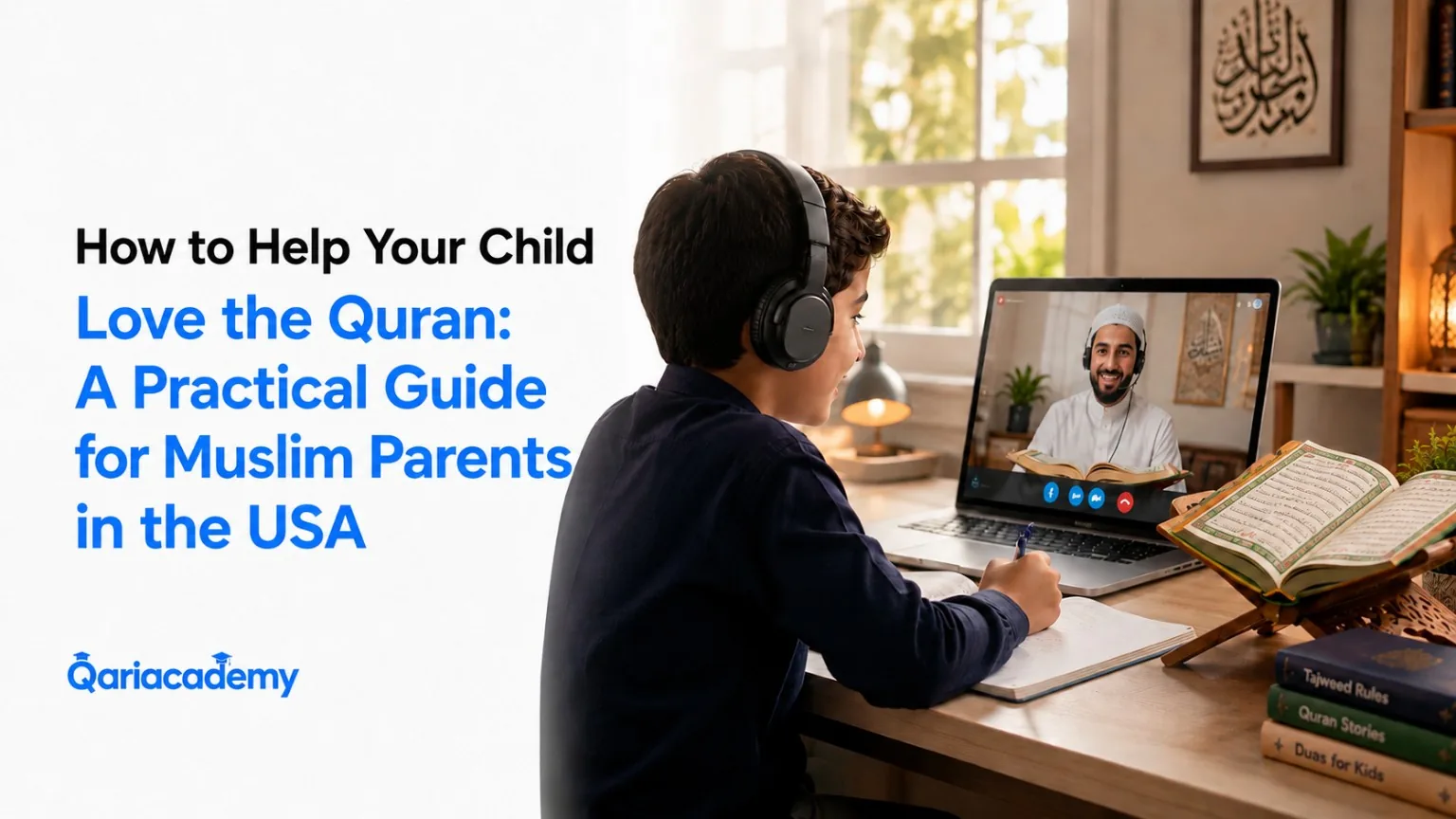
Many families across the US choose one-on-one online Quran classes USA because a dedicated tutor can focus entirely on their child’s individual learning style, pace, and emotional needs.
Success Is More Than Completing Hifz
Some children complete the entire Quran at a young age; others memorize fewer surahs with deep understanding. Both journeys have immense value.
Success in Islamic education is not measured only by quantity or speed. A child who memorizes a few surahs, understands their meaning, acts upon their guidance, and loves the Quran has achieved something truly profound. The goal is raising young Muslims whose hearts remain connected to Allah throughout every stage of life.
Make Dua for Your Child
No parenting strategy is complete without dua. Ask Allah often to open your child’s heart to the Quran, increase their understanding, make learning easy, and bless them to live by its light. The ultimate guidance comes from Allah alone.
Final Thoughts
Helping your child love the Quran is one of the greatest gifts you can give them. It is not measured by how quickly they finish memorization, but by whether they continue turning to the Quran for comfort and guidance throughout their lives.
Start with love. Stay consistent. Trust Allah with the results.
Frequently Asked Questions (FAQ)
My child gets bored during Quran lessons. What should I do?
Keep lessons short (15–20 minutes), celebrate small progress, include stories of the Prophets from the Quran, and work with an engaging teacher who understands how to teach children interactively.
Should I reward my child for memorizing the Quran?
Yes! Positive reinforcement works wonders. Celebrate consistency and effort with simple rewards, favorite meals, or special outings to build joyful associations with learning.
What if my child makes mistakes often?
Mistakes are a completely normal part of the learning process. Correct them gently without showing frustration, and focus on steady, daily review rather than perfection.
Help Your Child Build a Love for the Quran
At QariAcademy, we believe every child learns differently.
That’s why our one-on-one online Quran classes are tailored to match your child’s age, personality, and pace. Our experienced, English-fluent teachers create a warm, supportive environment where children grow in confidence while developing a genuine love for the Quran.
Whether your child is taking their very first steps in reading or building on their memorization journey, we are here to support your family every step of the way.
🎁 Book a FREE Trial Lesson Today
Discover how personalized learning can help your child build strong faith, beautiful recitation, and lasting Islamic character.